

























































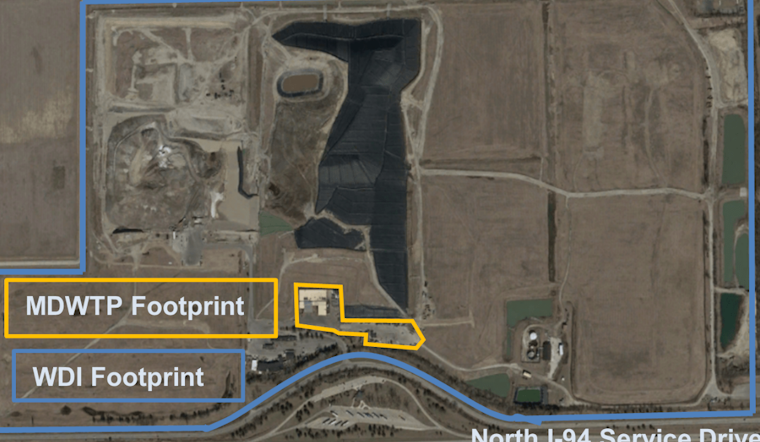
Starting this September, Wayne County is slated to become the repository for radioactive waste from the bygone days of World War II's Manhattan Project. The material, a mix of soil and potential concrete remnants, is being shipped from Niagara Falls and will land in the Republic Services-operated Wayne Disposal facility in Van Buren Township, reports CBS News Detroit.
The decision, according to the U.S. Army Corps of Engineers, follows a public meeting in Western New York to discuss the transport and cleanup strategy. However, it appears to have been a poorly kept secret, with locals near the landfill only now getting wind of their impending inheritance. "Mostly soil, potentially some concrete that was in within the site," as Brent LaSpada, a planner at the Corps, described, as per CBS News Detroit. Specialized dump trucks will be utilized to haul roughly 6,000 cubic yards of the toxic legacy.
The local response has been less than receptive. Wayne County Executive Warren Evans voiced strong opposition, associating the transport and disposal of hazardous materials with longstanding "environmental injustice" and the health burden it places on residents. EPS stopped a similar plan last year after public upheaval, including concerns voiced by Evans himself. Late into the fray, U.S. Rep. Debbie Dingell stepped in, demanding explanations from the Army Corps. Down the line, Kevin McNamara, Van Buren Township's supervisor, tried to reassure residents, "We worked very closely with this company to make sure our residents are safe," he said, as cited by Michigan Public.
Republic Services, who will operate the landfill harboring the radioactive transport, insists that their facility is up for the task. According to CBS News Detroit, they claim that remediation projects like this are in their wheelhouse, and the incoming material will be managed "safely, responsibly and in compliance with all local, state and federal regulations." Dingell and other leaders, however, are calling for greater transparency about this shipment and the risks it carries.
Despite the tension, Michigan's Department of Environment, Great Lakes, and Energy (EGLE) have affirmed the safety and compliance of the undertaking. The materials indeed "contain residual radioactivity from uranium processing during World War Two," an EGLE statement outlines, as per The Detroit News, but they also reassure the public that these pose no notable risk. EGLE's full take on the matter aligns with the official rationale for the disposal site's selection.



