

























































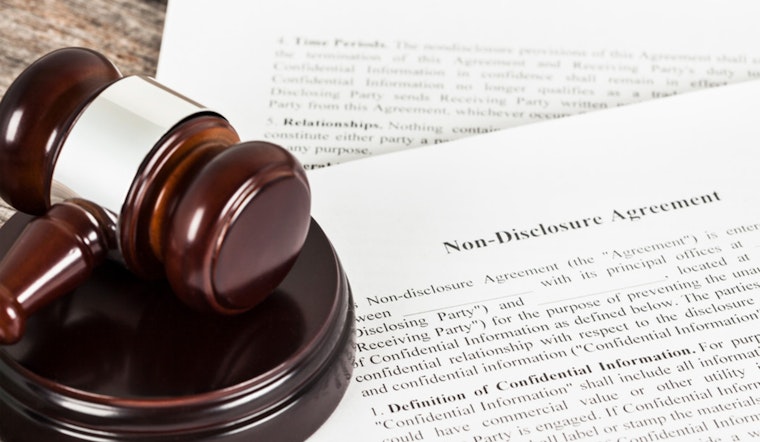
Why do laws read like riddles wrapped in enigmas? It appears that the impenetrable style known as "legalese" isn't just a stubborn fixture in law offices and courtrooms — it might serve a deeper psychological purpose. According to a recent study by MIT cognitive scientists, the complex language of legal documents conveys a unique sense of authority, with even non-lawyers replicating its structures when tasked with writing laws.
In their investigation, published in the Proceedings of the National Academy of Sciences, Edward Gibson, an MIT professor of brain and cognitive sciences, alongside his colleagues, points to the resemblance of legalese to the archaic formula of "magic spells." As non-lawyers naturally gravitate towards center-embedding clauses — sections of a sentence nestled within another — when writing their own versions of laws, it seems that this linguistic practice has become synonymous with the air of formal legitimacy required in legal texts, despite the confusion it often engenders, as reported by MIT News.
The roots of this style stretch back several years, when the team analyzed a mammoth horde of legal contracts to understand better what sets them apart linguistically. Confronted with the juggernaut of legalese, even lawyers confessed a preference for plain English, acknowledging that it didn't sacrifice any enforceability. Yet, the tenacious use of convoluted language in legal documents persists. "People seem to understand that there’s an implicit rule that this is how laws should sound, and they write them that way," Gibson told MIT News.
This realization about legalese's entrenched role in legal tradition now drives the team to explore its origins. Were early American laws, or even ancient laws like those in the Hammurabi Code, written in a similarly complex manner? As they sift through layers of legal history, the goal is to potentially encourage a shift toward more accessible language in legal documents. Echoing a 1970s initiative to simplify legal jargon, Gibson remains hopeful: "We have learned only very recently what it is that makes legal language so complicated, and therefore I am optimistic about being able to change it," as noted by MIT News. Despite these findings, the adoption of clearer language in legal settings has been sluggish at best, with traditional legalese clinging to its authoritative charm.
The drive toward transparency in law is not new, as evidenced by the Nixon administration's push for regulations in "layman's terms." Yet, decades later, the MIT study underscores just how little has changed. With clarity on what makes legal language so dense, we might finally see efforts to demystify the legal code and its archaic sense of mystery. The team at MIT continues to pursue a deeper understanding of legalese's foundations, with the hope of fostering a legal landscape where the language of the law is as clear to the public as it is to those who practice it.



