

























































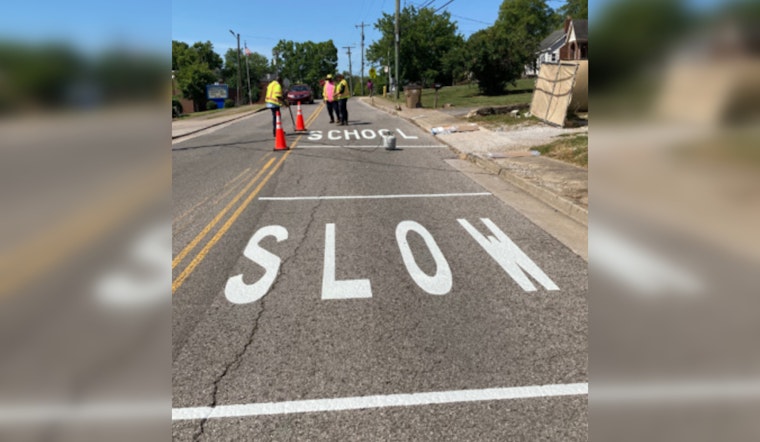
As Metro Nashville Public School students returned to class, they were greeted with new street safety measures courtesy of the Nashville Department of Transportation and Multimodal Infrastructure (NDOT). The NDOT announced the completion of safety upgrades for 15 school zones throughout the city, wrapping them up in time for the first school day after the summer break. The improvements include more visible pedestrian crossings and measures to curb speeding.
The upgraded safety protocols are a collaborative effort involving various Metro departments and Metropolitan Nashville Council Members; the goal is to establish more consistent traffic control across Nashville school zones, these efforts came to fruition largely due to the June 2023 Surplus Budget, which provided the necessary funding. Mayor Freddie O’Connell highlighted the collective responsibility for school zone safety in a statement obtained by the city's announcement, urging motorists to "be a part of increasing safety for kids in the school zone by staying alert, avoiding distractions behind the wheel, and giving yourself plenty of time to get where you’re going so it’s easy to honor the school zone speed limit."
The safety measures being rolled out included "SLOW SCHOOL ZONE" pavement markings, radar feedback signs that show drivers their speed flashing "School Zone" beacons and updated speed limit signs aimed at bolstering the visibility and awareness of drivers as they transit through these vital areas near educational institutions. NDOT Director Diana Alarcon stressed the importance of protecting school-age children, who she deemed among "our most vulnerable road users," in a commitment to achieving Nashville's Vision Zero goal—aimed directly at eliminating preventable deaths and injuries on their streets.
Priority for these updates was given to locations within Nashville's Vision Zero high injury network, a designation for the city's most dangerous streets and also in line with the U.S. Department of Transportation's Justice40 Initiative, which seeks to correct historical underinvestment in disadvantaged communities. With an additional 37 locations slated for improvement, NDOT Engineer Chris Augustinos told the city's press, "These measures are expected to reduce driver speeds in school zones and provide attention-directing cues for drivers where pedestrians are expected to cross the street," underscoring the ongoing commitment to making roads safer for Nashville's children and all who share the road with them.





