

























































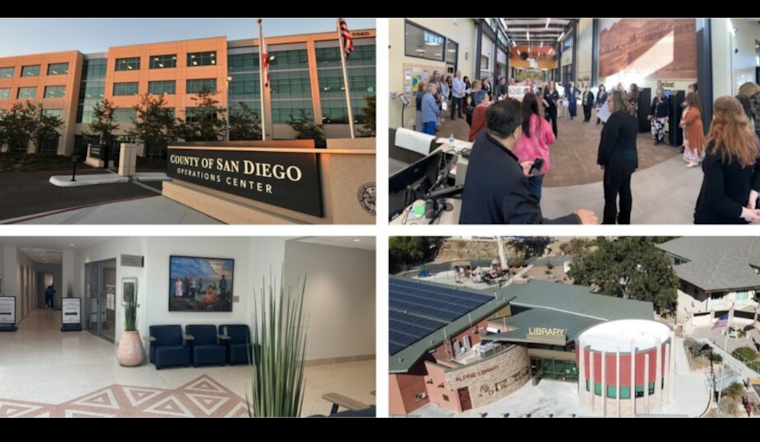
In sustainable design and construction, San Diego County is showcasing its dedication to the environment with its seventh Crisis Stabilization Unit, designed not only as a refuge for those in mental turmoil but as a model for green construction. Set to open next year in El Cajon, the facility will be the County's sixty-eighth building to achieve the U.S. Green Building Council's LEED (Leadership in Energy and Environmental Design) standards. Additionally, it is paving the way towards energy independence as the eleventh "Zero Net Energy" building in the County's portfolio, equipped with solar rooftop panels and other energy-saving features.
The ecological aspirations of the County extend beyond using sunlight, however. The new facility represents a commitment to "embodied carbon" strategies, a move to lower the carbon footprint through conscious material choices like low-carbon concrete and sustainably sourced timber. Marko Medved, head of the County’s Department of General Services, elucidated the significance of this approach in a statement obtained by County News Center, "Embodied carbon is newer to the County. But he said it has become the third environmental pillar, along with LEED status and Zero Net Energy, that the County uses to build sustainable facilities." Through these measures, the County expects a 30% reduction in carbon emissions for constructing the new unit.
Eco-friendly construction is not a novel concept for San Diego County, which adhered to Zero Net Energy and LEED standards many years ago. The noted environmental stewardship led the County to secure the prestigious Platinum certification in the LEED for Communities program in 2018, becoming the first in California and the second in the nation to achieve this distinction. Multiple County buildings, including seven branch libraries and an award-winning Assessor/Recorder/County Clerk’s Office & Archive building in Santee, have been recognized as LEED certified, with several attaining "gold" level certification and Zero Net Energy status.
The impact of such green buildings is not limited to energy savings alone. Medved underlines the holistic approach to green building design when he told County News Center, "You get there,” Medved said, “by having an efficient building, having low water use, recycling, using local materials and making the interior environment good for the people who are working in there—having good, natural light, good circulation and good air quality."
In a conscious stride toward environmentally responsible infrastructure, the County's $79 million Southeastern Live Well Center, which opened its doors in 2023, also boasts LEED certification and Zero Net Energy operation.





