

























































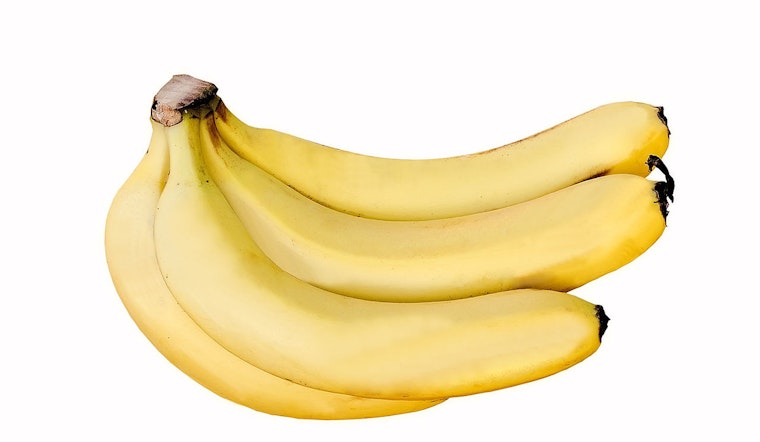
The Cavendish banana variety, which has been a global staple for decades, is currently under threat due to a destructive fungal disease known as Fusarium wilt of banana (FWB), but researchers at the University of Massachusetts Amherst may hold the key to its survival. The scientific team, spearheaded by UMass Amherst, has uncovered new insights about the pathogen responsible for this crisis, Fusarium oxysporum f.sp. cubense (Foc) tropical race 4 (TR4).
According to a University of Massachusetts Amherst press release, the Cavendish banana, has been succumbing to a more virulent strain of FWB that is not descended from the pathogen that afflicted its predecessor, the Gros Michel banana, in the 1950s. Professor Li-Jun Ma stated, "The kind of banana we eat today is not the same as the one your grandparents ate. Those old ones, the Gros Michel bananas, are functionally extinct, victims of the first Fusarium outbreak in the 1950s."
Research published in Nature Microbiology brought to light the existence of specific accessory genes within TR4 that are linked to the production of nitric oxide, a notable element in its pathogenicity. Lead author Yong Zhang, who completed his doctorate in UMass Amherst’s Organismic and Evolutionary Biology program under Ma's guidance, explained how they studied 36 different strains of Foc to reach these findings. They determined that TR4 uses accessory genes to produce and detoxify fungal nitric oxide, which facilitates host invasion.
Mitigation strategies are now conceivable due to the identification of these critical genes. "Identifying these accessory genetic sequences opens up many strategic avenues to mitigate, or even control, the spread of Foc TR4," Yong told UMass Amherst. Ma, however, points to the broader issue of monoculture in agriculture, cautioning that a lack of diversity in commercial crops amplifies their vulnerability to such pathogens. For consumers, she suggests exploring different banana varieties that might be found in specialty food stores.
The study was a collaboration involving experts from various institutions around the world and was supported by funding from several U.S. agencies including the National Science Foundation and the Department of Agriculture, as well as contributions from international bodies such as the Guangdong Science and Technology Project, CARS, and the Laboratory of Lingnan Modern Agriculture Project.





