

























































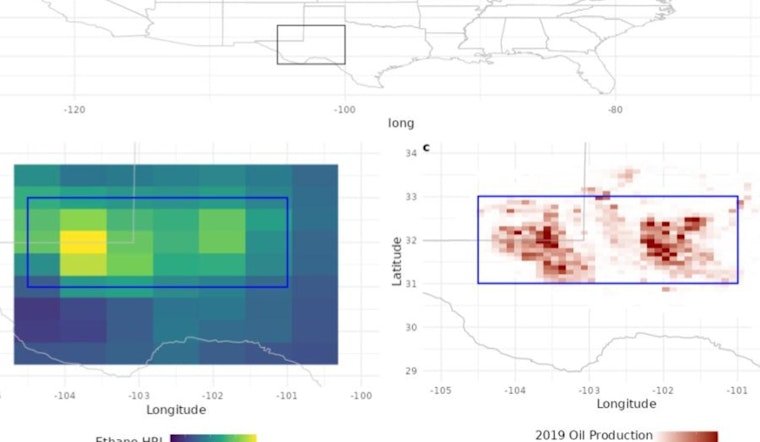
University of Minnesota scientists are opening a new chapter in the monitoring of fossil fuel emissions, and this time, their eyes are in the skies. By leveraging a sophisticated satellite-based instrument, the team has developed a groundbreaking method to track ethane—a key pollutant and marker of natural gas—right from space. According to a report from the university, the project, recently featured in Nature Communications, signifies a major leap in our ability to quantify global fossil fuel emissions.
The novel approach involves analyzing how infrared radiation, which Earth emits, winds its way through the atmosphere before escaping into space. Recognizing that certain gases absorb this radiation, the researchers have utilized this property as a gauge for measuring their concentration in the atmosphere. Dylan Millet, a professor at the College of Food, Agricultural and Natural Resource Sciences (CFANS) and project co-author, underscored the significance. "Oil and gas extraction degrades air quality and contributes to climate warming," Millet stated. "Diagnosing and mitigating these impacts requires accurate knowledge of the underlying emissions," he told the university's news service.
Using a combination of satellite data and machine learning algorithms, the team managed to pinpoint atmospheric ethane levels, painting a revealing picture of ethane distribution over key oil and gas regions. The results, which might raise some eyebrows, show that the Permian Basin—a vast stretch of land in western Texas and southeastern New Mexico—is a large-scale emitter, contributing to at least 4-7% of the total global ethane emissions from fossil fuels. Furthermore, they discovered that emissions from the Permian Basin are a whopping seven times higher than previously estimated.
What sets these findings apart is their implications for the future. As pointed out by lead author Jared Brewer, a postdoctoral associate in CFANS, this research is just the starter's pistol for what's possible with satellite observations. "We've known for some time that our current estimates of ethane emissions are too low, and this new tool allows us to see where on the planet those missing emissions are probably coming from," Brewer said. With plans to deploy additional instruments in geostationary orbits for finer, hourly observations, researchers are hopeful for a future where air pollutant emissions are better understood and mitigated.
Backed by the National Aeronautics and Space Administration and the National Oceanic and Atmospheric Administration, such initiatives also highlight the roles universities play in addressing environmental challenges. The University of Minnesota’s CFANS, with its legacy of innovation and a commitment to sustainability, looks set to continue contributing valuable insights into how science can navigate us through pressing global issues.





