

























































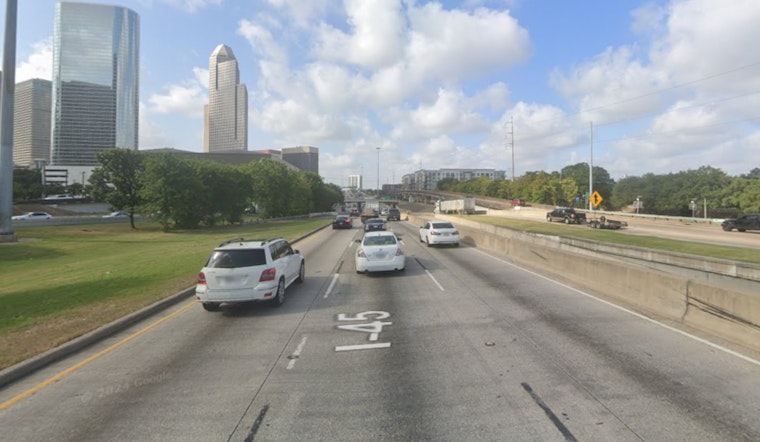
As Houston gears up for the I-45 mega-project, a financial surprise has emerged with the first phase of road work cruising in at an eye-watering $80 million above budget estimates. The projected cost for the construction, part of a massive $11.2 billion effort to reconstruct the freeway core and expand Interstate 45, has Houstonians facing a profound case of budgetary whiplash.
Initial bids for the work on I-69, which snakes through Third Ward and Midtown from Texas 288 to I-45, revealed only two contenders, according to Chron. Local firm Williams Brothers Construction is apparently leading with a $695.5 million bid - a sum that exceeds the Texas Department of Transportation's $615.7 million forecast. The other bid from Webber was a stunning $1.254 billion, startlingly over the initial estimate.
The Texas Transportation Commission must raise the green flag post a comprehensive review. With this project being just the first of three phases, the construction which aims to conclude by 2042, is expected to spread over two decades, impacting the daily lives and routes of the locals.
Amidst the fiscal tumult, TxDOT spafterokeswoman Raquelle Lewis informed The Houston Chronicle that "The bid is not final and construction is not allowed to proceed until the Texas Transportation Commission accepts it and others after TxDOT staff review." As the numbers crunch and the city hall deliberates, public meetings loom on the horizon, with a Sept. 19 engagement that promises to shed more light on proposed changes to the project and its extensive timeline.
But it's not only traffic flows and city streets at stake here. Human stories intersect with these grand plans, such as that of Thomas Cognata, a Midtown resident whose home lies in the project's shadow. The palpable tension between progress and personal loss is evident when Cognata, in an interview with The Houston Chronicle, expressed a bittersweet sentiment: "I love this part of town. It is really the part of town that made Houston feel like home."
Residents are encouraged to participate in the public discourse, leaving comments on the proposed changes until Oct. 4.



