

























































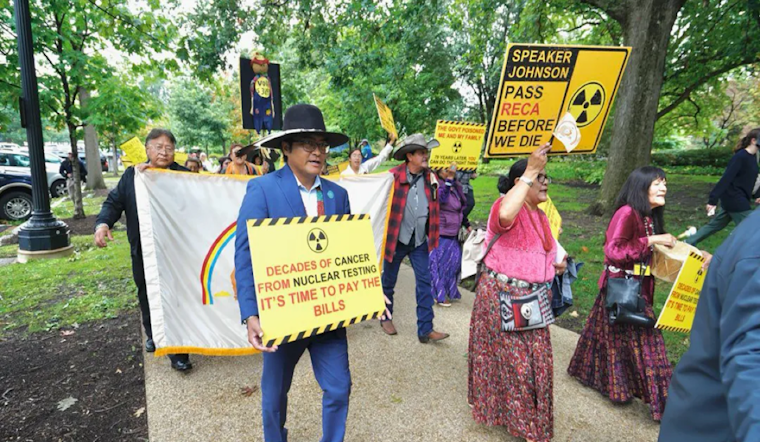
In a vivid demonstration of activism and solidarity, Navajo Nation President Buu Nygren led a march in Washington D.C. alongside over 50 individuals, including a coalition of Navajos, Hopis, and other Indigenous community members. Their goal was resolute: to push for the passage of the amendments to the Radiation Exposure Compensation Act (RECA) through the U.S. House of Representatives. Clad in bright yellow and voicing their demand to “Pass RECA now,” they were not just any advocates—they were survivors, family members, and eye-witnesses to the toll of the nuclear industry on Indigenous lives.
The cohort, determined to see justice served, received organizational support from the Navajo Nation Washington Office, which, according to the Office of the President and Vice President of the Navajo Nation, fundraised over $40,000 to cover their travel expenses. This exemplified the urgency of the situation, with Director Justin Ahasteen emphasizing that "This is an issue that cannot wait." Their presence was a testament to a history of labor in the shadows of uranium mines—a legacy that demanded accountability and recognition.
Amidst the marchers were President Nygren and Navajo Nation Council Speaker Crystalyne Curley, who stood shoulder-to-shoulder with those they represented. Speaking at a Capitol press conference, President Nygren acknowledged the deep commitment of his people: "You can see it in our people, in our Native nations, that when there is work to be done, regardless if they’ve got their cancer treatment, regardless of what is going into their bodies, they want to put themselves out there that so that our people can be helped," he stated. His words, given to the Office of the President and Vice President of the Navajo Nation, painted a picture of resilience and sacrifice.
Curley highlighted the participation of those who despite age and ailment, journeyed to make their voices heard. "Many of our veterans, our workers, our grandmothers, our elders that are here," Speaker Curley said. "Some even marched in wheelchairs and also canes to get here. But it didn’t stop them. It didn’t stop them today," as reported by the Office of the President and Vice President of the Navajo Nation. Their presence underscored not simply a request, but a demand for the RECA amendments which seek to extend and expand benefits to more communities affected by radiation exposure, including Alaska, Colorado, and parts of Arizona.
Voices from within the group, like that of longtime RECA advocate and cancer survivor Phil Harrison, laid bare the personal cost of this struggle. "We were never told the dangers. We did it to provide for our families," Harrison divulged, his narrative encapsulating the sentiment of many present. "We want that justice," he added. His testimony is a reminder that their work was done in the name of national security, as gathered by the Office of the President and Vice President of the Navajo Nation.





