

























































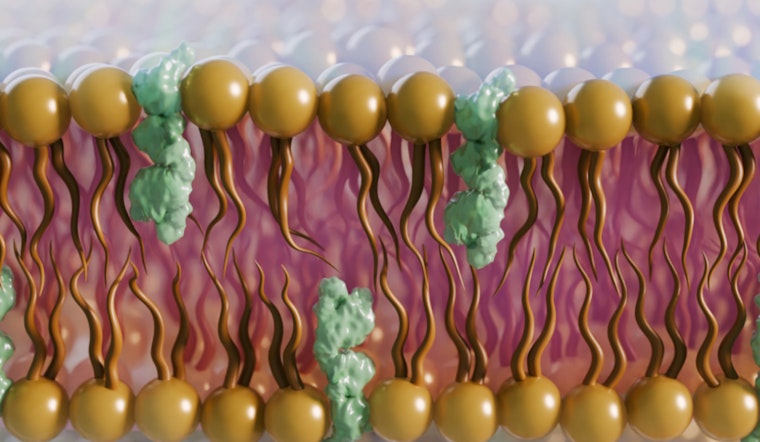
In an effort to address the growing threat of deadly fungal infections, scientists at Oak Ridge National Laboratory (ORNL) have been delving into the structure of fungus cell membranes. The research may pave the way for the development of new antifungal treatments at a time when the incidence of such infections has been inching upward, with 1.7 million people succumbing to them annually, as reported by ORNL’s newsroom.
The key to this research lies in focusing on ergosterol, a lipid akin to cholesterol in human cells, yet far less understood and therefore often overlooked by the scientific community. "There has been significantly less research conducted on ergosterol compared to cholesterol, yet many people assume these sterols behave the same," Shuo Qian, a staff scientist at ORNL, told the laboratory’s news service.
Fungal infections are particularly dangerous to individuals with compromised immune systems and the elderly, a demographic that is sadly experiencing a global increase in infection rates. The scarcity of effective, non-toxic antifungal drugs exacerbates the problem. Qian's team opted to concentrate their investigation on the cellular level, targeting the membranes commons to many fungi. Through a series of experiments, researchers gained valuable insights into how ergosterol operates within these membranes, noting noteworthy deviations in how it integrates and affects the surrounding molecules when contrasted with cholesterol.
Armed with sophisticated neutron scattering techniques, the Oak Ridge researchers were able to observe ergosterol's behavior in cell membranes in unprecedented detail. According to Gergely Nagy, a neutron scattering scientist at SNS and covered by the laboratory’s news service, “We were able to use several different techniques to study the material from various complementary perspectives.” This comprehensive approach utilized five different instruments at the Spallation Neutron Source (SNS) and the High Flux Isotope Reactor (HFIR), breaking new ground in the understanding of ergosterol’s role within fungal cells.
This concerted effort at ORNL is part of a larger endeavor supported by the Department of Energy’s Office of Science, marking a push towards combating one of the subtle yet increasingly persistent threats to global health. Insights gleaned from this research into ergosterol and fungal cell membranes are poised to inform the next generation of antifungal drugs, potentially reducing the heavy toll these infections currently inflict.



