

























































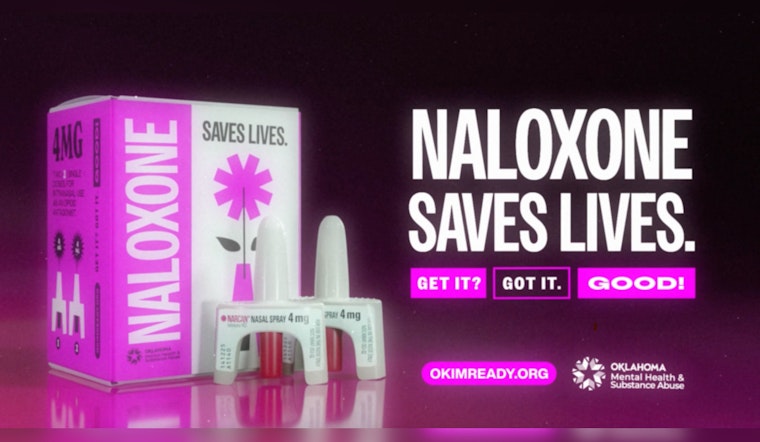
The Oklahoma Department of Mental Health and Substance Abuse Services is removing Narcan vending machines from locations across the state, citing cost-ineffectiveness and other operational challenges as the primary reasons. These vending machines, which also provided fentanyl test strips, were initially set up in May 2023 with the intention of curbing the rising number of overdose deaths attributed to fentanyl. The decision to uninstall the machines is expected to be completed by the end of September, as reported by KOSU.
KFOR reported that Oklahoma had seen over 700 fentanyl-related deaths in the last year alone, underlying the gravity of the issue the vending machines aimed to confront. Despite their potential for impact, Commissioner Allie Friesen stated that the initiative has not been cost-effective nor met the desired positive outcomes, with implementation challenges ranging from machine malfunctions to frequent stock shortages.
With the vending machine approach being phased out, Oklahoma Department of Mental Health and Substance Abuse Services is looking at alternative ways to address the overdose crisis in Oklahoma. Emphasizing this new direction, the department is collaborating with various segments of the community, including law enforcement, educational institutions, and nonprofit organizations, striving to explore more efficient and effective means of prevention. News On 6 provided comments from Sasha Teel, the department's Chief of Staff, who said, "The outcomes that we hoped for were just not there, so as an agency and as a leadership team, we stepped back, looked at what the data showed and said, 'Hey, this was not a cost-effective way to use taxpayer dollars'."
Teel's remarks align with Commissioner Friesen's, as detailed in a press release where she expressed that the initiative's underwhelming performance necessitated a reevaluation. As reported by KOSU, Friesen noted, "An initiative that was originally launched as a pilot program under previous leadership has been thoroughly evaluated over time. After reviewing the financial implications, data, and overall outcomes, it has become evident that the program has not proven to be cost-effective, nor has it consistently delivered the positive results we had hoped for." The vending machines were highly visible, previously stationed in high-traffic areas, including turnpikes, casinos, and libraries across Oklahoma.
In lieu of the vending machines, Oklahoma Department of Mental Health and Substance Abuse Services plans to implement a poster campaign with QR codes designed to direct Oklahomans to resources where they can obtain naloxone or test strips through the mail. This shift reflects ongoing efforts to optimize the allocation of funds and resources in the face of a persistent and life-threatening public health crisis. The new strategy intends to maintain the department's commitment to combating substance abuse while employing more sustainable and effective interventions.



