

























































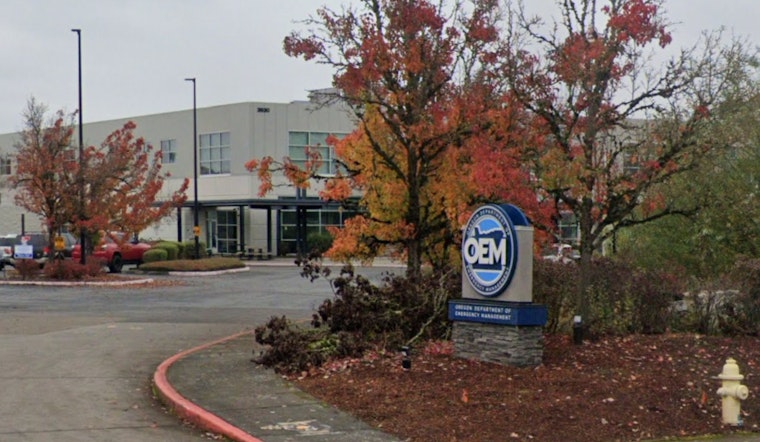
It's not every day that we get to see policies manifest in gripping, real-world scenarios, but in August this year, Oregon's recent communication upgrades did just that. According to a recent report by the Oregon Department of Emergency Management (OEM), a new VHF radio channel, established for better coordination between air and ground emergency medical services, proved its worth during simultaneous crises at a wildfire camp near the Ochoco National Forest. The newly designated VMED29 channel facilitated life-saving communication that resulted in a successful operation.
With a firefighter and a camper caught in dire emergencies on August 4, swift action was crucial. Speaking with the OEM, Oregon's Statewide Interoperability Coordinator, William Chapman, recalled the incident. "That day VMED29 played a crucial role in saving the life of an injured firefighter and a camper experiencing a cardiac emergency at the same time," he said. It was the kind of test you don’t know you’re preparing for until it charges through the forest, embodying the power of practical foresight.
The integration of VMED29, a channel specifically licensed for flying EMS units to communicate with their ground counterparts, stemmed from an identified need by the U.S. Forest Service (USFS) and the Bureau of Land Management (BLM). Through the efforts of Oregon’s State Interoperability Executive Council (SIEC), the Washington State’s SIEC, and the Cybersecurity and Infrastructure Security Agency (CISA), VMED29 was set up and adopted across Oregon by February 2022. Its effectiveness, however, was not just in its creation but in the preparedness it enabled, taking center stage during the August incident smoothing out wrinkles between communication lines.
When the stakes were at their highest, coordination between ground crews and helicopters via VMED29 led to the successful treatment and evacuation of both individuals—one for cardiac surgery, the other for serious trauma injuries, as recounted by a OEM release. An after-action report verified the pivotal role the communication protocol played in effectively handling the concurrent emergencies. "Seeing the tangible impact of our work in such critical moments reinforces the value of our efforts," Chapman said, reminding us that the abstract realm of policy and planning often touches down firmly in the field of action.
For the OEM, the incidents served as a testament to proactive planning and the unseen labor of setting up systems that respond effectively when crisis hits. While much of this work occurs away from the limelight, incidents like the one at Ochoco National Forest starkly demonstrate the transformation of administrative action into lived salvation, bringing the importance of such groundwork into sharp relief.





