

























































In a significant stride toward bolstering nuclear nonproliferation monitoring, chemists at the Department of Energy's Oak Ridge National Laboratory (ORNL) have successfully executed the concurrent detection of fluorine and various isotopes of uranium within single particles. This achievement shines a new light on potential advancements in the scrutiny of nuclear materials by the International Atomic Energy Agency (IAEA). The innovative research, available in the Journal of the American Chemical Society, details how the fusion of two techniques can hasten the characterization of single particles, providing critical information on the chemical processes and historical data of materials.
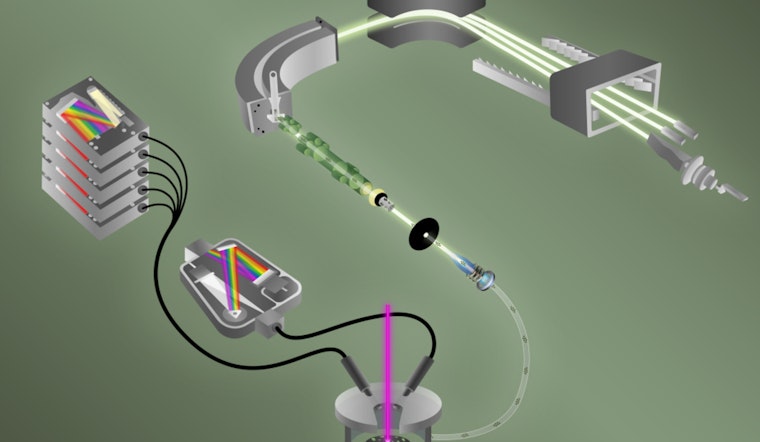
The ORNL team, led by Benjamin Manard, managed to analyze 40 particles in under five minutes, marking a substantial acceleration over traditional methods. "Rapid particle analysis for fluorine and uranium isotopic determination is what we've enabled," Manard told the publishing journal. Fusing laser-induced breakdown spectroscopy, or LIBS, and a mass spectrometry technique known as laser ablation multicollector inductively coupled plasma mass spectrometry, or ICP-MS, has provided a means to swiftly identify both the presence of fluorine and the isotopic composition of uranium in single particles. The LIBS element of the procedure, led by Hunter Andrews, vaporizes the sample to create a plasma, with the resulting emitted light revealing the elements within.
Meanwhile, isotopes of uranium are discerned using ICP-MS, where helium gas guides plasma atoms towards a mass spectrometer for isotopic characterization. Dialoguing with this combined analytical prowess, ORNL's Brian Ticknor emphasized the import of this duo to nuclear nonproliferation, explaining that "detection of uranium and fluorine in the same particle is meaningful from a nuclear nonproliferation point of view."
While the primary intent of this technology is to support national security objectives, its applicability isn't limited to that sphere alone. It also has potential uses in various sectors such as battery manufacturing and environmental science. Beyond monitoring nuclear activities, Manard has applied these techniques to ecological studies, including exploring fluorine distribution in shark teeth from Georgia Aquarium as a window into both current and prehistoric environmental conditions. These diverse applications born out of necessity in nuclear safety reflect an interdisciplinary approach to scientific research and innovation.
Concluding their successful integration of LIBS and ICP-MS, the ORNL team continues to look ahead to new challenges, anticipating that differentiating between other uranium compounds and applying their method to additional electronegative elements like chlorine will be within their grasp. Supported by the ORNL’s Laboratory Directed Research and Development program and managed by UT-Battelle for the DOE’s Office of Science, the team remains at the forefront of enhancing frameworks that protect against the unlawful proliferation of nuclear materials.



