

























































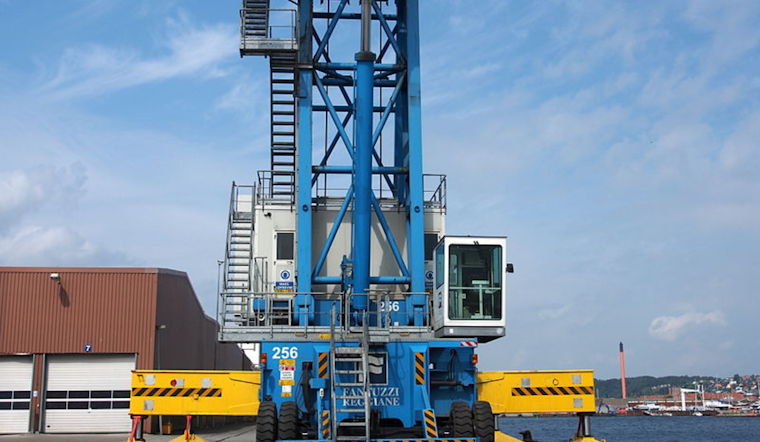
The Port of San Diego has reached a milestone with the operation of the first all-electric Generation 6 Mobile Harbor Cranes in North America at its Tenth Avenue Marine Terminal (TAMT). According to the Port of San Diego, To improve public and environmental health, the cranes exemplify a push towards modern maritime operations that are both clean and efficient. The communities of Barrio Logan, Sherman Heights, Logan Heights, and West National City are expected to benefit from the reduced air pollution.
During a recent ceremony, the Port demonstrated the new cranes' capabilities, with narration from ILWU Local 29 president Anthony Soniga. Following the display, state and local leaders, partners, community members, and stakeholders were offered tours of the new crane system. According to the Port of San Diego, Chairman Frank Urtasun said, "Our all-new, all-electric cranes meet our dual-focused maritime mission – delivering cleaner air for our communities and goods our families and businesses rely on." State Controller Malia M. Cohen, chair of the State Lands Commission, highlighted the importance of innovative clean energy infrastructure and workforce development in achieving a sustainable economy.
These cranes do more than help the environment; they also create economic opportunities. They can lift up to 400 metric tons, the heaviest capacity on the U.S. West Coast. This allows the Port to manage large cargoes, like solar and wind energy equipment, which are important for improving the power grid in the southwestern U.S. Liane Randolph, CARB Chair, highlighted the Port’s efforts to cut emissions and improve air quality, benefiting nearby communities that have struggled with pollution.
The Port invests nearly $125 million in clean air technologies and infrastructure projects. This includes shore power at terminals, a solar-powered microgrid, and a system to capture maritime emissions. The electric cranes, made by Konecranes, cost about $14 million and were funded through the American Rescue Plan Act and California recovery funds. Additionally, the Port set aside $8.9 million for electrical improvements, with some funding from a San Diego County Air Pollution Control District grant.



