

























































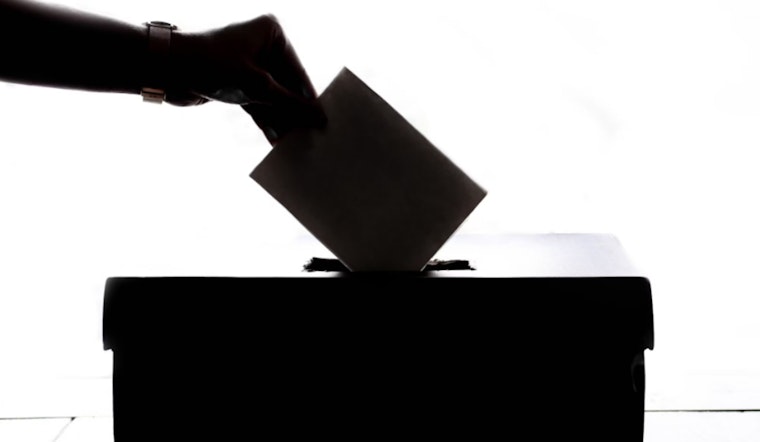
In a recent development, the Supreme Court partially upheld a contentious Arizona voting law, laying down a mandate that state voter registration forms submitted without proof of U.S. citizenship are to be rejected. According to NPR, the split 5-4 decision has triggered a whirlwind in the voter registration process in Arizona, creating a discrepancy between state and federal registration requirements.
The court's decree arrived just before the 2024 presidential election, thus inflaming the political battleground as Republicans and Democrats spar over voter access and election integrity. The Republican National Committee regards the ruling as "a major victory for election integrity," with RNC chairman Michael Whatley saying, "American elections must be decided by American citizens." In contrast, Arizona Democratic Secretary of State Adrian Fontes expressed concern over the timing, noting that such changes may cause confusion for voters, as stated in NPR.
This decision accentuates the broader GOP-driven narrative about concerns over illegal voting by noncitizens—a phenomenon that is statistically negligible. Investigations into voter registration have repeatedly confirmed the rarity of noncitizen voting. For example, in Georgia, Republican Secretary of State Brad Raffensperger reported that of 1,634 potential noncitizens who attempted to register between 1997 and 2022, none were mistakenly registered, as detailed by Arizona's Family. This is in the context of millions of voters being processed during this period, suggesting that existing protocols are effective at preventing ineligible voters from participating in elections.
In reaction to the ruling, Republicans in various states have taken further steps. Louisiana Governor Jeff Landry has taken the initiative by signing an executive order aimed at highlighting the prohibition against noncitizen voting. On the other hand, opponents of such measures argue they pose unnecessary barriers to legal voters and contribute to misconceptions about the prevalence of noncitizen voting. The debate continues as the legislation known as the Safeguard American Voter Eligibility Act, which demands proof of citizenship for voter registration, has passed the Republican-led House but faces opposition in the Democratic-led Senate. The Supreme Court's recent order, however, has signaled the possibility of more concrete decisions to come, with Justices Thomas, Alito, and Gorsuch hinting at their readiness to tackle the citizenship-proof requirements more extensively, as quoted by NPR.





