

























































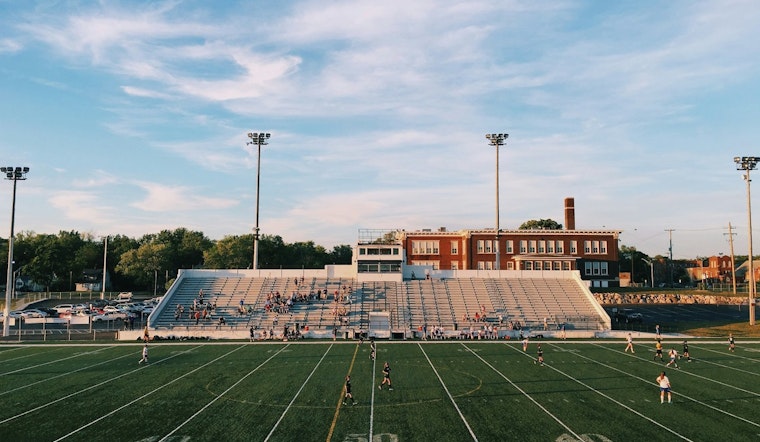
As the goalposts for youth sports participation in America are set ambitiously high by the Healthy People 2030 plan, a new study punctures the inflated expectations with a sobering reality. According to research from the University of Minnesota Medical School, highlighted in a recent University article, there's an underserved population in youth sports—and it isn't just about one aspect of identity.
Although one in two students lace up their cleats or sneakers, there's a significant drop when overlapping social identities come into play. Dr. Sarah Kaja, who headed the research at the Equitable Sport and Physical Activity Innovations Lab, used data from over 60,000 students to uncover barriers to participation. While taking shots at increasing overall engagement, the data revealed a stark contrast based on identity intersections. Dr. Kaja told the University of Minnesota, "By revealing more nuance in young people's level of engagement in organized sport and activity, our work is an important step to address which students need support to play."
With a focus on sports participation inequalities tied to various social identities, this research navigates the intersection of assigned sex, gender modality, and several other identifiers. Looking through the lens of the 2022 Minnesota Student Survey results, the numbers tell a story that's more dribble than slam dunk for groups holding multiple marginalized identities. Despite there being a 50% turnout for students playing sports, some subgroups barely scraped an 8-17% participation rate, demonstrating a gap that's not solely about economics, race, or gender, but the complicated places where these identities mesh.
Breaking it down, those with the highest engagement typically enjoy a trifecta of privilege: being white, heterosexual, and flush with resources. The study found that students at the vanguard of lacking representation in sports clutched at least one marginalized social identity, with the majority juggling more. An unsettling trend emerged for students with a marginalized sexual identity who also were tripped up by other factors such as low economic access, a higher BMI percentile, or transgender or gender-questioning identity.
This is not a solitary struggle seen through the prism of one identity. For example, the previous research has documented the hurdles LGBTQ+ youth face, amplified when interfacing with other axes of marginalization. The recent findings suggest that without a nuanced approach, interventions crafted to lift up young athletes might as well be missing the goalpost when it comes to those juggling multiple marginalized identities.
The University of Minnesota Medical School, grounded in its home on Indigenous lands, is vested in pushing the boundaries of medical knowledge and social understanding. Dr. Kaja, whose work has the backing of the National Institutes of Health’s National Center for Advancing Translational Sciences, calls for a renewed focus on tailoring research and solutions to "the adolescents who need the most support to participate," acknowledging the steep climb to achieving national public health targets if the disparities aren't appropriately addressed.



