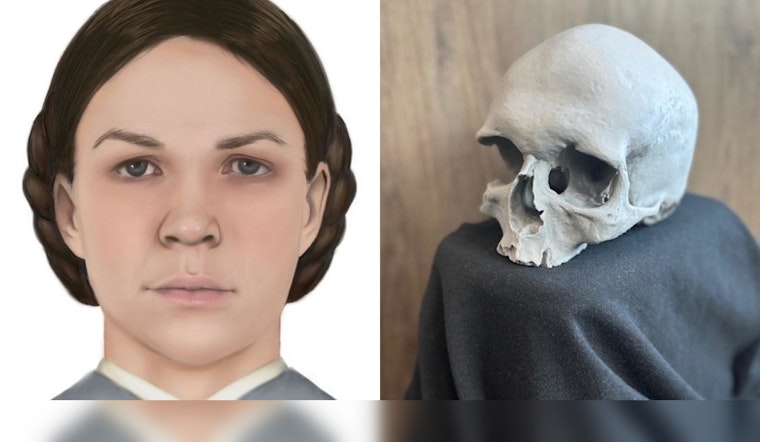
In an intriguing turn that bridges centuries past with our modern era, a skull and bone fragments found hidden behind the walls of a Batavia, Illinois home have been identified. According to CBS News Chicago, the remains belong to Esther Granger, a teenager from Merryville, Indiana, who passed away in 1866 due to complications of childbirth.
The mystery unfolded in 1978 when a couple renovating their home in Batavia stumbled upon a human lower jaw. A consequent search led to the discovery of the partial skull, with further investigations by the Northern Illinois University confirming their human origins and suggesting a history extending well before the 20th century. Despite the 46 years since the initial find, it was advanced DNA analysis that confirmed the skull's identity as Granger's, said Shaw Local.
The forensic endeavor to identify the remains was assisted by Othram, a Texas-based organization specializing in forensic genetic genealogy. They worked with the Kane County Coroner's Office to ultimately track down a second great-grandchild of Granger who provided the DNA link needed to solve this historical puzzle. Detailed genealogy research confirmed that Esther Ann Granger Peck, who the bones belonged to, was interred in Sturdevant Cemetery in Merrillville, Indiana.
How Esther's remains came to rest within the walls of a Batavia domicile remains uncertain, but Kane County Coroner L. Robert Russell expressed an "educated guess" that medical students may have robbed her grave to obtain a cadaver, stated CBS News Chicago. The bones and a few unrelated artifacts – a black bonnet, miscellaneous shoes, and a mechanic's rag, were detailed in the original police report, found by the family who called the Batavia police.
Initially investigated in 1978 and then stored as evidence, the mystery of the skull and bones would remain unsolved until 2021 when museum officials discovered them among old boxes. Clyde Snow, a pioneer in forensic anthropology, had examined the remains in the late '70s, concluding no sign of "trauma or disease that would have caused death." He encountered, he wrote in a letter to the Batavia Police Chief, "no criminal intent" behind the placement of the bones. The case, after a long cold spell, has been a testament to the persistent march of technology and its power to reconnect remnants of a life long gone with its history and lineage.