

























































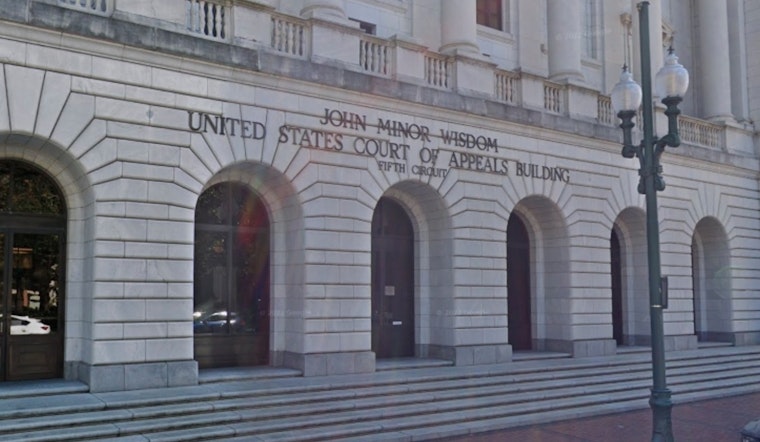
In a significant move for Texas' electoral process, the 5th U.S. Circuit Court of Appeals has allowed the state's Attorney General to resume investigations into alleged vote harvesting. This decision temporarily overrides a previous federal judge's ruling that deemed parts of Senate Bill 1 as unconstitutionally vague and a restriction on free speech.
According to The Texas Tribune, the previous block, issued by U.S. District Judge Xavier Rodriguez on September 28, had prevented the state from pursuing cases like the one against the League of United Latin American Citizens (LULAC). Attorney General Ken Paxton stated, "Blocking our ability to investigate certain election crimes would have been a serious disruption to the electoral landscape with only a month left before Election Day."
The law at the center of this legal dispute makes it a crime to offer or provide vote harvesting services for payment, with penalties of up to 10 years in prison and $10,000 in fines. Texas Republican lawmakers argue that SB 1 is essential for preventing voter fraud and maintaining election integrity. However, local election officials and voter outreach organizations have been confused about how to implement the canvassing restrictions, raising concerns that even providing volunteers with food or transportation could be seen as illegal compensation.
Challenges against various provisions of SB 1, including restrictions on voter assistance and mail-in ballots, are still ongoing. Organizations like La Union del Pueblo Entero, LULAC, and the Mexican American Legal Defense and Educational Fund (MALDEF) have been opposing the bill in court since August and September of 2021. Before SB 1 was enacted, groups like OCA-Greater Houston provided election-related assistance, such as language support. With the 5th Circuit's recent decision, these organizations now face uncertain legal circumstances once again, as per KXAN.
As the legal battle continues, the recent court decision has drawn mixed responses. State officials welcome the restored investigative powers, while advocates express concerns about the law's potential chilling effect on voter outreach. Nina Perales, vice president of litigation at MALDEF, praised the September 28 ruling, saying, "Today’s ruling means that voter outreach organizers and other advocates in Texas can speak to mail ballot voters about issues on the ballot and urge voters to support improvements to their communities," in a statement obtained by KXAN. The ACLU of Texas also celebrated the initial ruling as a victory for voting rights and accessibility.




