

























































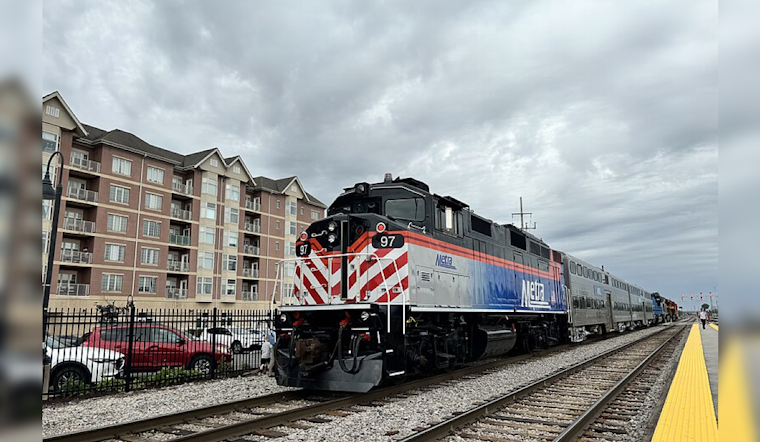
Chicago's Metra commuter rail is pushing to make its service expansion between the Loop and O'Hare Airport a permanent fixture, despite the trial's disappointing ridership results. During the Democratic National Convention's pilot program, which ran from August 11 to 30, the North Central Service line saw approximately 2,400 passengers using the service to travel to or from O'Hare, as reported by NBC Chicago. Metra spokesman Michael Gillis expressed that the number was less than expected, largely attributed to the fact that DNC delegates relied on buses for transportation, essentially "gutted the market we would have had," he told the Chicago Sun-Times.
Despite the trial's underperformance, Metra's intent to provide a more frequent regional service persists. The increased pilot service consisted of hourly trains, a significant step up from its regular six daily weekday trains and none on weekends. This effort aimed to offer an alternative to the Chicago Transit Authority's Blue Line, which currently provides transportation between the airport and downtown. "We are interested in more extensive, permanent service because we are trying to develop new markets to build ridership, and it would be beneficial to Metra and the region to have fast, frequent connections between the region’s two largest job centers (O’Hare and downtown)," Gillis elaborated in a statement obtained by NBC Chicago.
There remain, however, "major hurdles" that stand in the way of this service expansion. To move forward, Metra requires agreements with two freight railroads — Canadian National, which owns a portion of the tracks, and Canadian Pacific Kansas City, responsible for dispatching trains on another part of the route. Although these companies had agreed to the pilot program, they're less likely to consent to permanent changes without significant infrastructure improvements, explained Gillis. These improvements would involve the addition of extra tracks, sidings, crossovers, and flyovers. In the same discourse, Metra disclosed its plans to order battery-powered trains projected to arrive by 2027 to enhance all-day service, according to the Chicago Sun-Times.
On another front, Metra has secured federal grants to ameliorate pedestrian accessibility at the O’Hare Transfer Station, which currently requires passengers to traverse a street to connect with the airport's People Mover tram. Rick Harnish, executive director of the Chicago-based High Speed Rail Alliance, underscored the danger of this arrangement, recalling an incident in which he was nearly struck by a car at the station. Harnish stressed that Metra's aspiration for improved O’Hare service is not a novelty, yet significant leaps and bounds are necessary from both the transit agency and state and local governments to genuinely uplift passenger rail. "This current piecemeal approach is not going to get us there," Harnish stated. He went further to suggest a vision of a rail network that extends beyond just the Loop to O’Hare, connecting it to other cities as well.





