

























































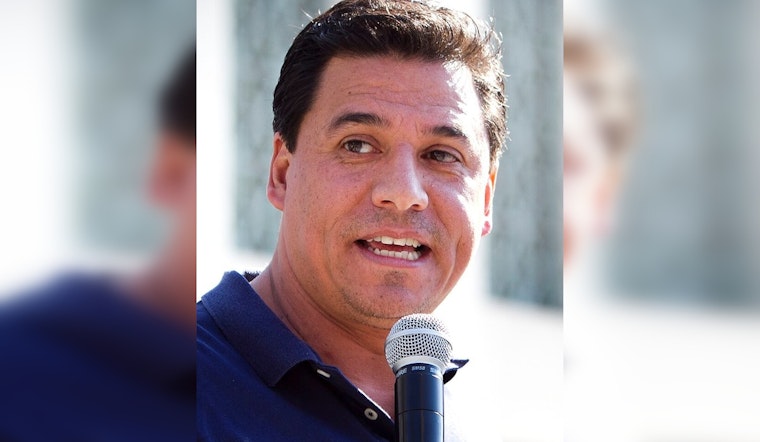
Disgraced former Los Angeles City Councilman José Huizar is set to begin a 13-year prison sentence after getting caught in a corruption scandal that rocked the city's political framework. According to City News Service, Huizar, 56, was slated to surrender to the U.S. Bureau of Prisons to serve his time for felony charges of conspiracy to violate the Racketeer Influenced and Corrupt Organizations Act and tax evasion.
Originally ordered to self-surrender on August 30, Huizar's surrender date was postponed due to an undisclosed "new, unexpected, and extraordinary event" linked to medical reasons which the government did not oppose. As the man once hailed by his legal defense as "an evangelist for robust development," now faces his sentence amidst a sprawling scandal. Huizar's pay-for-play practices, in which he accepted bribes including cash, casino chips, and other illicit perks valued over $1.5 million.
In a statement obtained by CBS Los Angeles, U.S. Attorney Martin Estrada described the case as "one of the most wide-ranging and brazen public corruption cases uncovered in this district." Huizar's admission to these schemes underscores a betrayal that has left an indelible mark on the city's governance, raising questions about the integrity of Los Angeles' development process.
The scandal also ensnared former Los Angeles Deputy Mayor Raymond Chan, who prosecutors allege was the brains behind the operation Chan, 68, was tasked with orchestrating bribes and lining his own pockets in the process—bagging at least $750,000 for himself according to NBC Los Angeles. Chan was convicted on numerous charges, including conspiracy, honest services wire fraud, bribery, and making false statements to a federal government agency, and is expected to start his 12-year prison term in January.
Both Huizar and Chan's indictments shed light on a murky web of corruption with roots spreading through the corridors of Los Angeles' City Hall, revealing the exchange of favors for high-rise development approvals, the misuse of public office for personal gain, and a culture of deep-seated corruption that took hold over decades. Members of this conspiracy included other city officials and staff, such as Huizar's former special assistant George Esparza and lobbyist Morrie Goldman, among others, all of whom pleaded guilty and agreed to cooperate with the government's investigation.





