

























































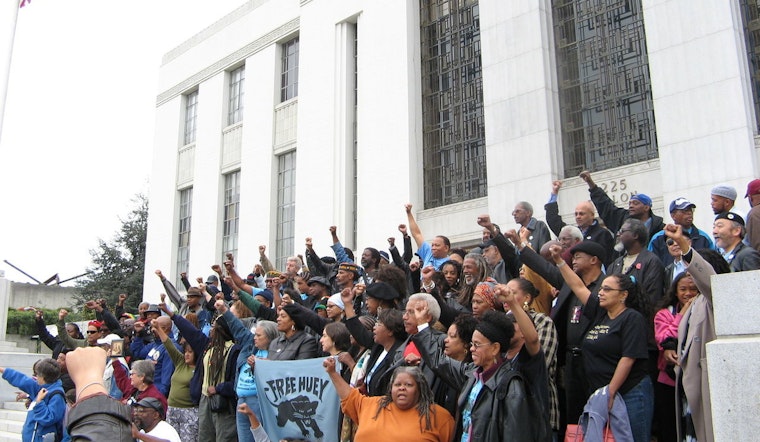
The legacy of the Illinois Black Panther Party, often overshadowed by its militant reputation is now being honored through a newly established heritage trail, featuring historical markers at key sites connected to the organization's history. The initiative, led by the Historical Preservation Society of the party's Illinois chapter, seeks to educate future generations about the group's significant humanitarian contributions, as detailed in reports by Chicago Sun-Times and the Chicago Tribune.
These historical markers will feature at 13 locations, such as the site of the chapter's first Free Breakfast for Children program, and places like the centre where Fred Hampton and Mark Clark were tragically killed during a police raid. The project, kicked off with a private celebration, marks an attempt to confront the disinformation campaign that has long obscured the Party's community-centric initiatives, as Rose Morris mentioned to the Chicago Sun-Times, “Much of this history is buried, and many of the youth do not know this story of the Black Panther Party.”
The Black Panther Party, created in the 1960s, involved itself deeply in social activism, emphasizing the need for self-sufficiency in the Black community. This stood in contrast to the more mainstream Civil Rights movement of the time which often championed integration. The Party's community programs, such as free breakfasts and medical services, are seen by many as precursors to government-run initiatives addressing social inequality today. Yet, as Leila Wills told the Chicago Tribune, the Black Panther's contributions have largely been "erased from Chicago’s landscape."
Alongside the narrative of violence historically used to characterize the Panthers, it is key markers, and online resources developed by the preservation society that aim to embolden the often-unrecognized positive impacts of the Party's work—as described by Billy Brooks, who told the Chicago Sun-Times, “What’s important is to get actual information out, there are so many misconceptions, so many untruths.” By providing QR codes on plaques, the organization initiates a digital experience to re-engage the public with this crucial aspect of local civil rights history.
In addition to the physical markers, the preservation society has already set its sights on more than a hundred other potential sites across Illinois that could be significant to the Black Panthers' narrative. This movement to reclaim and illuminate the narrative is a powerful stride toward enshrining the true legacy of the Black Panther Party—not just as a symbol of militance but as an enduring beacon for community upliftment and social justice. The initiative underscores the importance of historical perspective as a catalyst for ongoing conversation and education regarding the dynamic and multifaceted civil rights history of the United States.





