

























































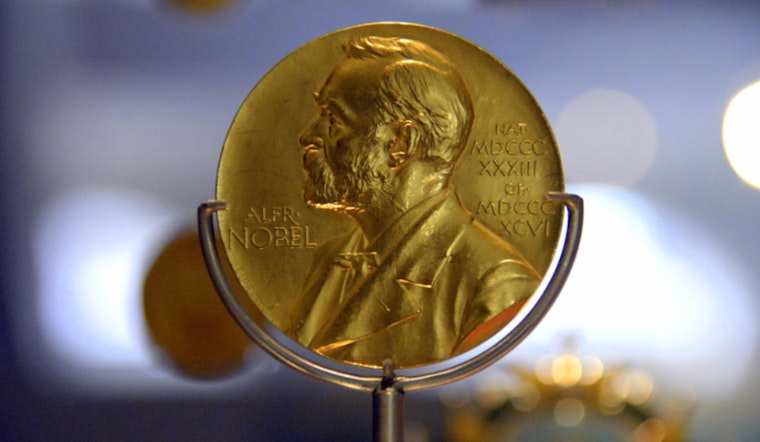
The Nobel Prize in physiology or medicine was awarded to two Massachusetts-based professors for their pioneering work in the discovery of microRNA. Victor Ambros and Gary Ruvkun were recognized for their significant contributions to the field of genetics—specifically, the discovery of tiny strands of genetic material that have the potential to transform the way we treat diseases like cancer. This revelation is seen as a profound leap in understanding how organisms develop and function.
Ambros, associated with the University of Massachusetts Medical School, along with Ruvkun from Massachusetts General Hospital and Harvard Medical School, chose to focus on genes that control developmental timing in cells. In their pursuit, they utilized mutant strains of worms, which are commonly used in genetic research, to eventually uncover the role of microRNA in gene regulation—a mechanism shown to be vital for the evolution of organisms over millions of years. This notable achievement was encapsulated in a statement from the Nobel Assembly at the Karolinska Institute, as reported by CBS News, calling it a "new dimension to gene regulation, essential for all complex life forms."
Thomas Perlmann, Secretary-General of the Nobel Committee, captured a glimpse into the personal reaction to the award by stating in an interview that Ruvkun "sounded very tired, but he quite rapidly was quite excited and happy, when he understood what it was all about." These details were shared by NBC Boston following the award announcement.
Dr. Claire Fletcher of Imperial College London, who is not associated with the Nobel Prize, explained the practical implications of the discovery by stating, "MicroRNA alters how genes in the cell work." She elaborated, saying, "We can take a microRNA that we know alters the activity of that gene and we can deliver that particular microRNA to cancer cells to stop that mutated gene from having its effect," in a revelation obtained by NBC Boston. Fletcher also mentioned that clinical trials to explore microRNA's usage in treating skin cancer are ongoing, with drug treatment approval potentially occurring within the next decade.
The award comes with a monetary prize of 11 million Swedish kronor, which translates to roughly $1 million, fulfilling a legacy endowed by Swedish inventor Alfred Nobel. Celebratory ceremonies for this year's laureates are slated for December 10, 2024, coinciding with the anniversary of Nobel's death. The Nobel announcements for other categories, including physics and chemistry, are also set to unfold in the coming days, as noted by both NBC Boston and CBS News.





_who_discovered_Penicillin._On_display_at_the_National_Museum_of_Scotland.jpg)