

























































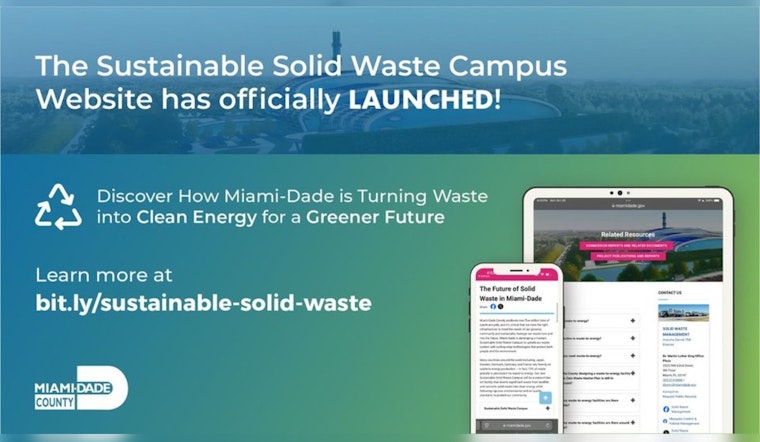
Miami-Dade is enhancing waste management with a new website showcasing the proposed Sustainable Solid Waste Campus. This facility will focus on innovative waste handling, according to the Department of Solid Waste Management. The site outlines a zero-waste approach that uses modern technologies for safe and efficient waste-to-energy conversion. With over five million tons of waste generated annually, the county plans to convert solid waste into clean electricity, potentially powering up to 70,000 households, as per a Miami Dade County release.
Miami-Dade County Mayor Daniella Levine Cava said, "We want residents to stay informed and follow along as we develop a state-of-the-art facility that will serve the waste management needs of our community for decades to come. We encourage everyone to explore the site and remain engaged as we work toward creating a cleaner, greener future for Miami-Dade County," in the Miami-Dade County release. Residents are encouraged to explore the new website, which addresses FAQs, explains waste-to-energy technology, and provides examples from other global communities using these strategies effectively. The campus aims to reduce greenhouse gas emissions through advanced waste management technology, reflecting the sustainable practices of countries like Japan and Sweden and positioning the county as a leader in eco-friendly initiatives.
Project director Aneisha Daniel, PhD, stated that the SSWC facility will manage waste sustainably while incorporating global best practices to ensure high standards for safety and efficiency. Beyond environmental benefits, the SSWC aims to promote economic sustainability by creating green jobs and encouraging fiscal responsibility, potentially providing a cost-effective solution for the county's increasing waste management needs.
The Sustainable Solid Waste Campus is designed to meet or exceed EPA air quality guidelines and will provide accessible emissions data for transparency. Inspired by successful global systems, the website plays a key role in maintaining an open dialogue with the public. It includes information about waste diversion facilities, such as organics processing, recycling, and biogas harvesting, bringing the county closer to its zero waste goal.



