

























































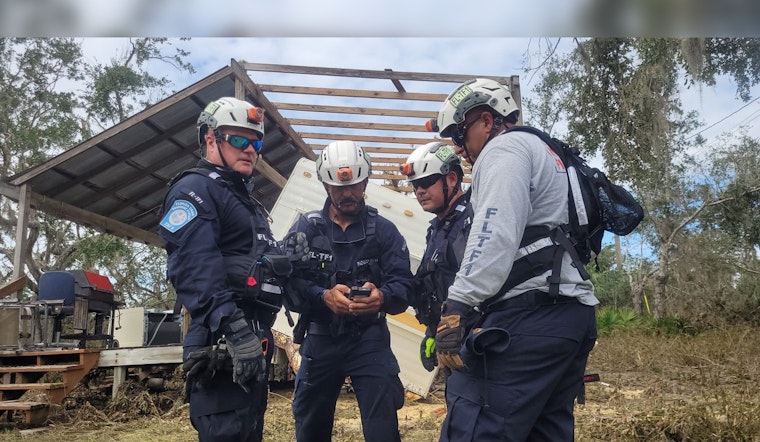
As the effects of Hurricane Helene linger in Florida's Big Bend region, the Miami-Dade Fire Rescue (MDFR)’s Urban Search and Rescue Florida Task Force One (FL-TF1) is dedicated to find and aid the storm-stricken communities of Dixie County. This 84-member team, equipped with expertise—ranging from medical and engineering fields, supported by search canines—comb through the debris and swollen waterways to locate, rescue, and provide comfort to those in distress.
According to a report by Islander News, FL-TF1 had mobilized even before Hurricane Helene made landfall, signaling their commitment to be ahead of the storm's challenges. Days after Helene's passage, these responders perform welfare checks, ensuring that each person in the affected zones is accounted for and safe.
Amid this ongoing suffering and the collective effort to recover from Helene, the importance of survival is closely tied to safety. MDFR emphasizes to the local residents the dangers that may arise amidst the aftermath, particularly in daily acts like operating a generator. An advisory from Community Newspapers underscores that "Generator exhausts contain carbon monoxide, an odorless, tasteless, and invisible poisonous gas that can be lethal in minutes."
Residents are urged to follow the critical operational instructions for their generators: never inside, always at least 20 feet away from living quarters, and never refuel them while they are hot. Furthermore, generators should be kept dry to avoid the risk of electrocution.
As MDFR US&R FL-TF1 continues to navigate through the debris left by Hurricane Helene, their evolving response plans highlight a resilience mirrored by the community.




