

























































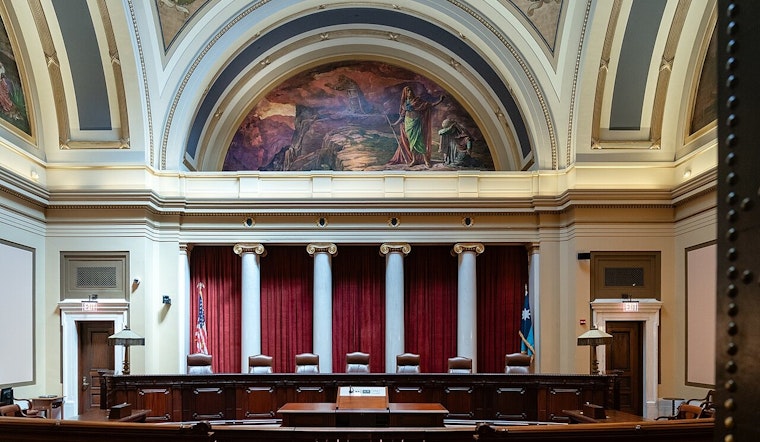
In a legal battle that carries significant weight for Indigenous communities, the Minnesota Supreme Court is reviewing a constitutional challenge to the Indian Child Welfare Act (ICWA). With the act's primary goal of preventing the separation of Native American children from their families and tribes, supporters of ICWA congregated at the Minnesota Capitol steps ahead of the September 30 hearing, voicing their solidarity for upholding this crucial legislation.
Senator Mary Kunesh (DFL-New Brighton), vocal in her defense of tribal sovereignty, spoke to the crowd assembled. Later, her office released a direct statement where she eloquently outlined the stakes: "Since before the founding of our country, Indigenous Americans have been the subject of centuries of systemic oppression, through both direct campaigns of violence and intentional civic exclusion and exploitation. The Indian Child Welfare Act is one attempt to reconcile with that history and heal the wounds that were inflicted on Indigenous communities," according to the Senate DFL website. Her words resonate with a history of Native American resilience and the ongoing struggle for cultural preservation and sovereignty.
The enactment of ICWA in 1978 was a pivotal move by the federal government to address the alarming rates at which Indigenous children were being removed from their homes. It was an intervention that sought to offer some semblance of justice, acknowledging that Native children should have the chance to grow within their own communities and cultural heritage. This stance was most recently endorsed by the United States Supreme Court, which, in 2022, upheld the provisions of ICWA in a significant 7-2 decision.
In her Capitol steps speech, Kunesh underscored the need for the continuation of ICWA's standards, saying, "It is crucial that we keep ICWA’s standards and preferences in place and promote the sovereignty of our Indigenous neighbors and allow them to keep their nations and culture intact." These discussions are not merely about policy or child welfare in the abstract but are touchstones in the broader American narrative—a narrative wherein the quest for tribal sovereignty is an intrinsic part of the pursuit of equity and justice. That precious equilibrium seems always in jeopardy, always something to be defended from the next challenge, the next court case. This point in Minnesota's legal history is yet another testament to that ongoing vigilance.



.jpg)