

























































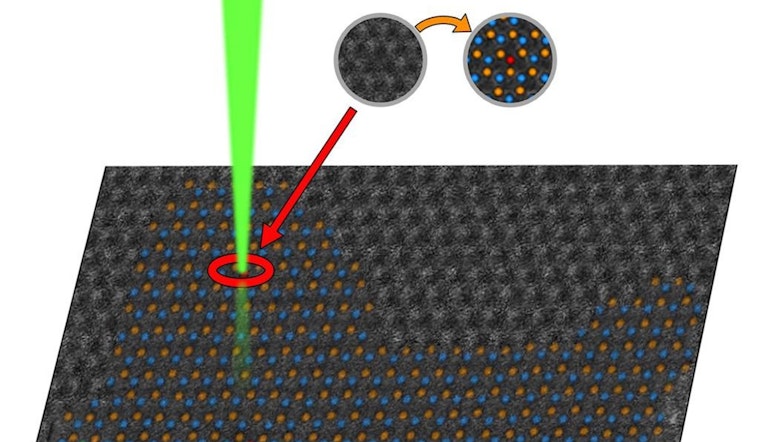
Researchers at the Department of Energy’s Oak Ridge National Laboratory have developed a game-changing technique that could significantly improve our understanding of quantum materials and their potential applications in quantum computing and electronics. Detailed in a recent report by ORNL, the method known as the Rapid Object Detection and Action System (RODAS) merges various high-tech imaging processes to observe rapid changes within materials at the atomic scale.
The traditional combination of scanning transmission electron microscopy (STEM) and electron energy loss spectroscopy (EELS) hasn't been without its drawbacks, mainly because the electron beam used in this analysis tended to alter or degrade the materials examined, effectively shifting the state of matter away from its original properties. RODAS technology however, mitigates these issues while incorporating dynamic computer-vision-enabled imaging and real-time machine learning, which allows the system to focus solely on areas of interest, conducting analyses in a fraction of the time it previously took.
Kevin Roccapriore of ORNL's Center for Nanophase Materials Sciences underscored the significance of understanding atomic-level defect configurations within materials. "Understanding defect configurations is crucial for developing next-generation materials," Roccapriore said in a statement obtained by ORNL. He highlighted the possibility of intentionally creating specific configurations to produce desired properties, which could have profound implications for materials science.
The team's success with RODAS was demonstrated through their study of single-layer molybdenum disulfide, a material with promising applications in the quantum computing and optics fields. Through their analysis, they observed how defects, such as single sulfur vacancies, can influence the optical and electronic properties of the material. This form of focused study on materials like molybdenum disulfide represents a new frontier in the field, as it offers insights into the behavior of materials under various stimuli and in dynamic states.
Advancements in electron microscopy are continually pushing the boundaries of our understanding in physical science. Roccapriore emphasized the pivotal role systems like RODAS could play in spurring discovery and facilitating the development of transformative technologies. The project, sponsored by ORNL's Laboratory Directed Research and Development program and supported by the DOE Office of Science Basic Energy Sciences, showcases the agency's commitment to addressing significant scientific challenges.





