

























































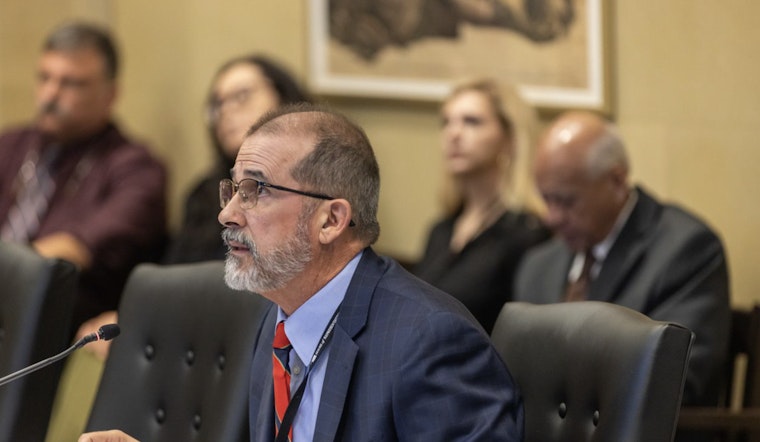
Rep. Tom Gann raised concerns about the proliferation and misuse of Automated License Plate Readers (ALPRs) in Oklahoma during a House State Powers Committee study session yesterday. In his remarks, detailed by the Oklahoma House of Representatives, Gann criticized both the infringement on privacy and the potential legal mishaps stemming from the use of ALPRs beyond their lawful purpose of spotting uninsured motorists.
The study revealed that many local governments have partnered with Flock, a big-tech firm, to deploy advanced vehicle scanning technologies that operate around-the-clock, sharing collected data with municipal bodies and law enforcement. This usage seems to swiftly outpace the current legal boundaries designed to govern them. As a response, Gann seeks to update laws, suggesting that with an affidavit or warrant, ALPRs could properly be used to target specific criminals. He cited the capture of an individual in Florida who was accused of attempting to assassinate former President Donald Trump as an instance when such technology was used effectively.
The most urgent issue, according to Gann, is the threat to personal privacy. These surveillance tools can inadvertently record sensitive personal visits – to doctors, political gatherings, or places of worship – possibly using that data against individuals. "These uses are not authorized by Oklahoma law," Gann specified in his comments documented by OKHouse.gov. He advocated for liberty and privacy, as outlined by the Constitution, highlighting the importance of those values rather than imposing a universal safety requirement.
Transparency, Gann contends, is sorely lacking when it comes to the deployment of surveillance cameras and the stewardship of the data harvested. He argues there is a need to openly share where cameras are located, who receives the data, and the policies of technology providers. "We must have constitutional protections in place," Gann insisted, emphasizing the need to avoid a dystopian reality where cameras monitor every street corner, according to OKHouse.gov.
Chad Marlow of the American Civil Liberties Union also weighed in, asserting that while ALPRs can serve public safety, they can pose a genuine hazard if misapplied. "In fact, they are more like a real bullet, and that if not used properly and safely they can pose a significant threat to Oklahomans," Marlow told OKHouse.gov. The dialogue highlights an ongoing national conversation about surveillance, civil liberties, and the balance of power between individuals’ rights and law enforcement's tools in a technologically advanced age.





