

























































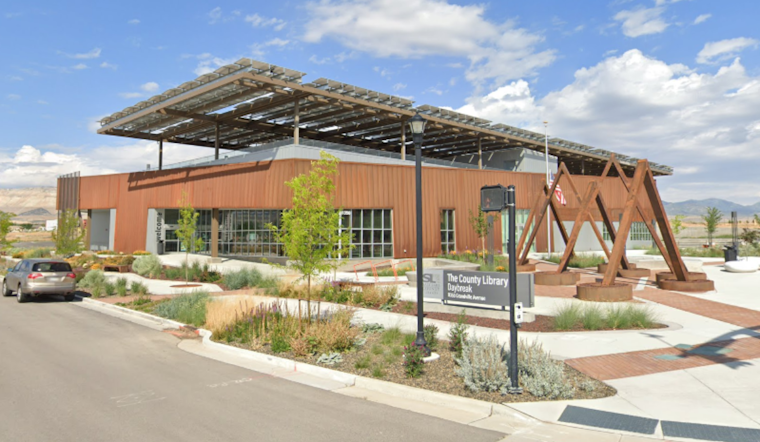
Utah's green architecture just scored a major win with the Salt Lake County Library's Daybreak branch achieving Net Zero status, the first of its kind in the state. This designation is no small feat, it represents a comprehensive approach to sustainability, where a building produces as much renewable energy as it consumes over a year.
Two years of rigor and meticulous energy balance checks have led to this milestone. According to Salt Lake County, besides being a hub for community gathering and learning, the site is a marvel for eco-conscious design. "Our employees, and the architects went above and beyond to meet the Net Zero Energy requirements and I could not be prouder," County Library Director Joey McNamee expressed. The building's groundwork includes geothermal heating and cooling systems and an impressive array of 512 rooftop solar panels, which supply an impressive 102% of its energy needs.
Contributing to the cultural fabric of Salt Lake County, the Daybreak branch opened in 2022, offering many amenities like a Create space, an outdoor amphitheater, a rooftop garden, and various community rooms. With its services and state-of-the-art green technologies, the library fetched the limelight not only for its commendable collection of books but also as a paragon of energy efficiency.
"Salt Lake County is growing and, it's vital that we do so thoughtfully, responsibly, and sustainably," Salt Lake County Mayor Jenny Wilson said, as per Salt Lake County. She pointed out that apart from enhancing the community's living standards today, the library's design and applied technologies are a gift to future generations. As architectural design meets environmental stewardship, the Daybreak Library sets a new benchmark for building facilities on a sustainable development path.





