

























































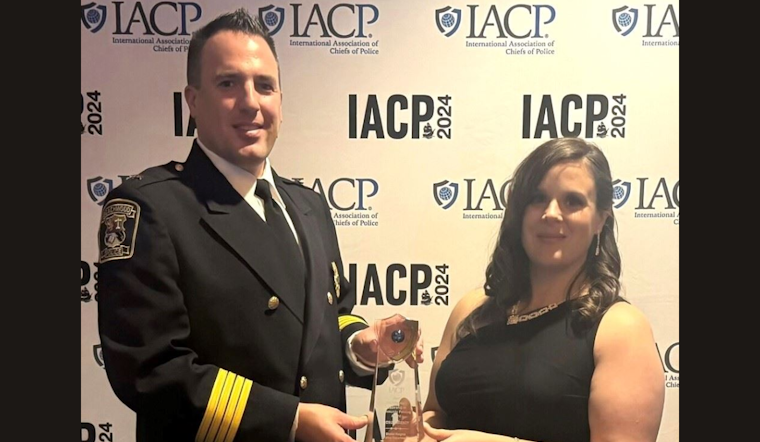
The Shaker Heights Police Department recently garnered international recognition by receiving the International Association of Chiefs of Police (IACP) Walmart Leadership in Community Policing Award. Specifically distinguished among midsize agencies, the department's innovative mental health response program has significantly impacted its service communities. According to the City of Shaker Heights' official announcement, the award was handed out at Tuesday's recent IACP conference in Boston.
In their quest to build trust and enhance the efficacy of their policing, the Shaker Heights Police Department initiated the mental health response team in 2022. Having recognized the need for such a service, the department has since seen its program evolve into a regional service, extending its support to nearly 120,000 community members. According to the Chiefs' Association, with the addition of a licensed mental health clinician, the response team not only provides diversion assistance but also valuable support to the responding officers themselves. This has led to both a reduction in the use of force and cultivated increased trust with the families of those served.
Among those accepting the prestigious award for the SHPD were Daniel Grispino, the former Shaker lieutenant and currently the Beachwood chief, and Annette Wallace, MSW, LISW-S, the mental health response program coordinator. Renamed First CALL, an acronym for Crisis Response and Local Linkage, the program is lauded as a national replication beacon. "The need for expanded mental health services became abundantly apparent post COVID lockdown," Shaker Police Chief Wayne Hudson told the City of Shaker Heights official website. "Shaker Heights mental health regional response program is becoming a model for the nation."
While the accolade is substantial on its own, the implications of Shaker Heights' program extend far beyond the podium and plaque. Communities fraught with the dilemmas of responding to mental health crises are now looking to Shaker Heights' example for guidance. Their success embodies a shifting paradigm in law enforcement where vulnerability meets with support rather than force, where the health crises of the mind are met with understanding and professionalism that was not always assured in less enlightened times.





