

























































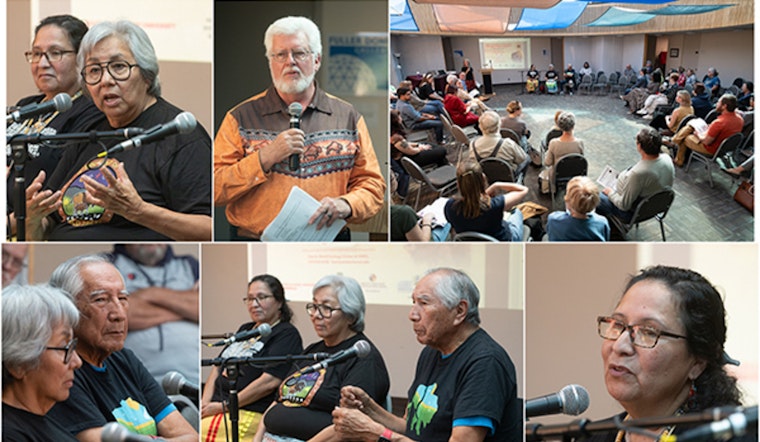
Conversations on conservation and cultural resilience took center stage when Southern Illinois University Edwardsville (SIUE) recently hosted the public dialogue "Humans, Nature and The Buffalo Treaty." This event spotlighted The Buffalo: A Treaty of Cooperation, Renewal, and Restoration, a 2014 accord where over 60 First Nation North American Tribes pledged collaborative effort to preclude the extinction of a keystone species crucial to the historical livelihood of millions, SIUE News reported.
A pivotal moment in the revival of this almost-lost symbol came when notable figures such as Roxann Smith, M.Ed., and Jonny BearCub Stiffarm, JD, of the Assiniboine and Sioux Tribes, along with Leroy Little Bear, JD, of Kainai Nation, shared insights—their vocal journeys revealing the treaty's role in fostering a space where both the past's echoes and the future's hopes can reverberate, "We cannot break this treaty, and why would we? Because the buffalo are us and we are them," Smith professed, driving home the intrinsic connection between tribes and their long-heralded bison.
The concern extends beyond spiritual and cultural to economic realities, as the Fort Peck Indian Reservation itself must grapple with the preservation of the buffalo herds without letting the expense become a financial drain, "You want them to be a contributor to not only the health of the tribe and the mental well-being of the tribe, but also, if possible, to create an additional small but important revenue stream where they contribute in return," BearCub Stiffarm explained, acknowledging the layers of dependency between survival, sustainability, and sovereignty. Reflecting on education differences, BearCub Stiffarm pointed out the transformation since the 1978 Indian Religious Freedom Act, saying, "we now are having a resurgence and a revitalization where members who held our faith closely need to share that, and they are slowly doing it," according to SIUE News.
Inter-institutional collaboration was vital with contributions from the Harris World Ecology Center at UMSL, Saint Louis Zoo, Missouri Botanical Garden, the Buder Center for American Indian Studies at WUSTL, and SIUE's Native American Studies Program—their combined efforts underscoring the potency of unified, interdisciplinary endeavors in tackling the multifaceted challenges of environmental stewardship, "But I was more impacted by the idea of the treaty as a commitment. It’s a commitment to the young people, to buffalo, to the land, to the water that they even spoke about, and to traditional knowledge. To the Earth and to the people--all the people," Carol Samarah, SIU NAGPRA Program Director, elucidated, as told by SIUE News.





