

























































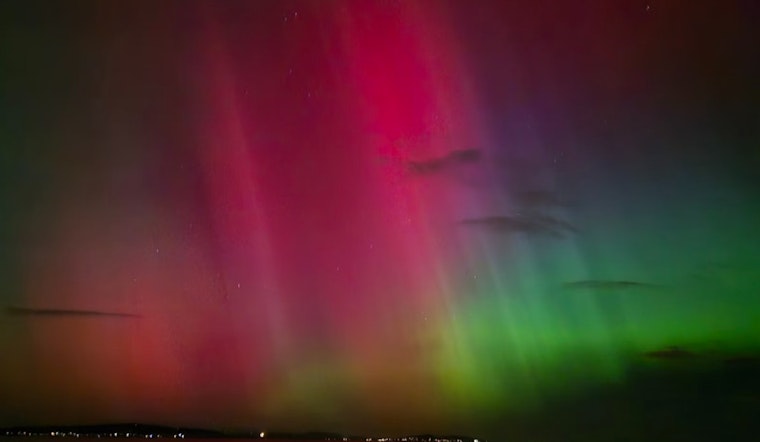
Texans may find themselves looking skyward again as the Lone Star State is on the cusp of another potential celestial show thanks to a severe geomagnetic storm forecast for the area. This geological event originates from a solar flare that occurred on Tuesday, followed by a coronal mass ejection (CME) that's now hurdling towards Earth at an impressive 2.5 million miles per hour, according to the Space Weather Prediction Center (SWPC). This has led to the SWPC issuing a G4 or "severe" Geomagnetic Storm Watch for Thursday (10/10) and Friday (10/11) as reported by KSAT, so while places like San Antonio might not witness the famed auroras directly, cameras might pick up glows in the Texas skies under the right conditions.
Despite the excitement of a potential light show, it's been noted by the Space Weather Prediction Center that the actual impact of the solar storm's arrival to Earth may not be fully understood until the CME is closer, which could potentially be by tomorrow midday. People who are farther north have a higher chance to see the northern lights, yet there's a slim possibility even those in the southern U.S. could catch a glimpse of the aurora, particularly those with the right photography equipment.
While the notion of a solar storm might sound foreboding and tech disruptions were mentioned as a slight possibility, such as advanced GPS and satellite interruptions, major disturbances aren't likely. Power grids have been alerted and are prepared to make necessary adjustments, ensuring that any impact on technology and infrastructure should be minimal, reassures the Weather Authority.
For those passionate about the night sky, this is not the first time this year that Texans have gotten to marvel at the northern lights. The solar maximum, a period of heightened solar activity, has brought more frequent occurrences of such natural light displays in the sky—it was only back in May that similar geomagnetic conditions allowed the northern lights to be viewable in Texas skies, and if the sun continues this level of activity, sightings may become more frequent. Renowned local photographer Blake Brown, with a decade of chasing meteorological moments behind him, told MySA how this year alone, he has captured the northern lights five times—this is the evolving canvas that nature provides, and the marvels it's capable of, even in places such as Texas where the northern spectacles were once a rare sight.
As communities brace for possible tech inconveniences and gaze hopefully at the horizon, this celestial drama serves as a gentle reminder of our small place amidst the vast cosmic theatre. Updates on the geomagnetic storm's impact on Texas, changes to the forecast, and possible sightings will continue to be shared by local weather authorities and through communal platforms like KSAT Connect where residents are encouraged to share their sky photos and videos.



