

























































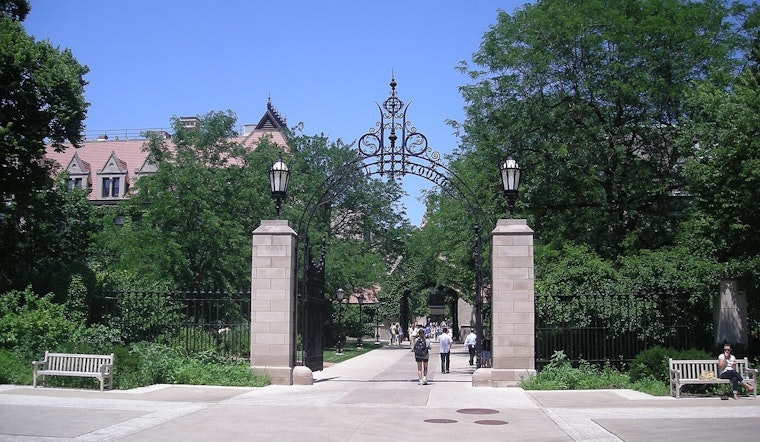
The University of Chicago's South Side Science Festival made a splash this past Saturday, turning the Hyde Park campus into a vibrant hub for young science enthusiasts and their families. The event, now in its third year, adhered faithfully to its "Science for All" motto, showcasing the vast and varied realm of STEM fields. Enthusiastic youngsters from across the South Side were treated to an array of interactive experiences, from biotech and life sciences to quantum physics.
As reported by the Hyde Park Herald, the festival, free and open to the public, launched at 11 a.m. on the Crerar Quad with a rich schedule that ran until 6 p.m. Among the over 60 hands-on demonstrations were a liquid nitrogen show and a jellyfish meet-and-greet, a skateboarding lesson, as well as an opportunity to examine cancer cells under a microscope.
Randall Mcauley and Celia Paris, residents of the area, have brought their children to the festival every year since its inception. Their enthusiasm was echoed by many of the attending families, who were eager to witness their children's captivation with the sciences. Mcauley, a pediatrician, expressed a personal interest in the potential influence of technology on his children's futures, particularly in fields such as robotics and AI, "That’s stuff that’s so far from what I do," he told Chicago Sun-Times. His daughter Ilsa's excitement was particularly piqued by picking out a tooth at a mock archaeological dig site, which she believed might be from a saber-toothed tiger.
The festival sought to bridge more than just the gap between scientists and the public – it was a celebration of the potential within each child and a showcase of the diverse pathways available through STEM education. Founders Sarah King and Maanasa Raghavan have seen their vision bloom, with an abundance of volunteers contributing to the festival's success. "We’re becoming obsolete in the best possible way," King said with a laugh in an interview with the Chicago Sun-Times.
As momentum for the South Side Science Festival continues to grow, the broader implications of accessible science education highlight the importance of such community-based events. The co-founders hope that this festival serves as a model that could inspire similar events across different institutions, expanding the reach of science and reinforcing that indeed, "Science is for everyone."



.jpg)