

























































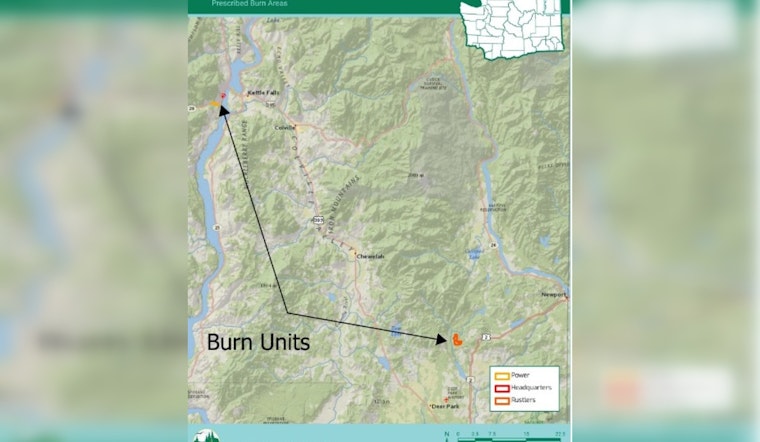
The Washington Department of Fish and Wildlife (WDFW) has commenced its annual fall tradition of setting controlled burns, known as prescribed fires, for forest management across Eastern Region 1, starting this week. These fires are a tactic used by land managers to decrease the likelihood and severity of future wildfires, and they serve to ameliorate habitat for wildlife. According to details released by the WDFW, these burns focus on bolstering ecosystems that support the state's diverse fish and wildlife species, while concurrently enhancing recreational opportunities linked to these natural resources.
This autumn, the WDFW is targeting nearly 400 acres across various sites. The actionable burns include approximately 250 acres in the Rustlers Gulch Unit of the Sherman Creek Wildlife Area in Pend Oreille County, about 20 miles north of Spokane, and around 140 acres in the Sheriff Creek Unit, situated roughly 10 miles west of Colville in Ferry County. To see the detailed map of areas scheduled for prescribed fires, interested individuals can view the map by following an online resource provided by the WDFW.
Prescribed fires are strategically planned for the fall season when cooler temperatures and higher moisture levels create ideal conditions for low-intensity burns. These cooler conditions not only make the process safer but also ensure the management objectives are met, which include habitat improvement for various wildlife, ecosystem health, and reducing the potential for catastrophic wildfires. "We can create and maintain wildlife habitat on these valuable ecosystems through introducing periodic low to moderate intensity fires, often after forest management work has reduced fire fuel levels," said Rob Lionberger, statewide prescribed fire planner for WDFW, in the department's announcement.
Lionberger also highlighted the ecological benefits of fire, noting that, "Fire rejuvenates important browse species for our wildlife including native grass and brush species favored by deer, elk, and moose, while providing the added benefits of improved ecosystem health and resiliency, reduced wildfire intensities, and improved access for recreationists and hunters." Despite the advantages of prescribed burns, the WDFW acknowledges the inconvenience the smoke may cause to nearby residents and visitors using the public lands, especially during hunting seasons. Nevertheless, they assert that the smoke from a prescribed fire is usually less intense and of much shorter duration than that from an uncontrolled wildfire.
These fires are continuously monitored until they are completely extinguished, with crews working diligently to minimize smoke impacts on surrounding areas. The execution of prescribed burns depends heavily on the weather, and if optimal conditions are not met, the burns will not proceed. WDFW may announce additional burns on lands they manage in Eastern Washington if favorable conditions present themselves. The Department ensures that signs are posted well in advance of any prescribed fires, to inform the public and frequent users of these areas. WDFW's mission, through active land management and habitat restoration, is to act as stewards for Washington's natural ecosystems and safeguard land and water for its wildlife and the people of the state.





