

























































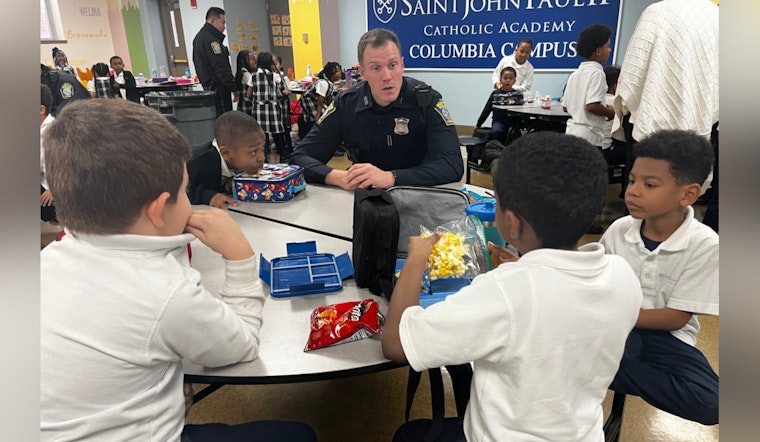
In an effort to forge stronger ties with the community, officers from Boston's District C-11 paid a visit to St. John Paul Catholic Academy in Dorchester, where they dove into storytime and collaborative block-building activities with the students. The visit allowed officers to engage in light-hearted interactions, aiming to cultivate a sense of unity and trust between law enforcement and local youth, as reported by the Boston Police Department.
Underlining the significance of early positive engagement, the police department's initiative emphasizes community policing as more than a mere series of tactics; it is an ongoing promise to the public—officers showing up in full force not just in moments of crisis but in the nurturing spaces of childhood where foundations for future dialogue can be began to be lain, where the work of trust-building is indeed a brick-by-brick endeavor. The academy visit was painted with cheerful exchanges, a testament to the department's belief in the lasting impact of such formative experiences.
The narrative of community policing is frequently caught between the soaring rhetoric and the unforgiving ground-level reality where mistrust between citizens and officer's simmers, but initiatives like the one undertaken by District C-11 offer a different story—one that focuses on the creation of bonds through shared smiles and the universally understood language of play. Participation in storytelling and playtime activities suggests a move towards demystifying the police role for children, underscoring the communal aspirations of law enforcement within everyday life.
District C-11's approach, according to their announcement, is centered on a genuine commitment—officers taking seriously their role as stewards of more than just law and order, but also guardians of aspiration and hope, indeed showing up day after day, answering the call to serve and protect includes both the peaceful patrolling of streets and the joyous engagement with the citizens, even the youngest, to foster a safer, more connected community.
While a singular visit to a local academy doesn't entirely reshape the complex nature of police-community relations, it arguably plants the seeds for future growth. As small gestures accumulate into a larger pattern of engagement, the presence of Boston's officers in settings like St. John Paul Catholic Academy sets a precedent for the kind of community-focused policing that might transform public perception and the reality of policing, one block, one story, one interaction at a time.



