

























































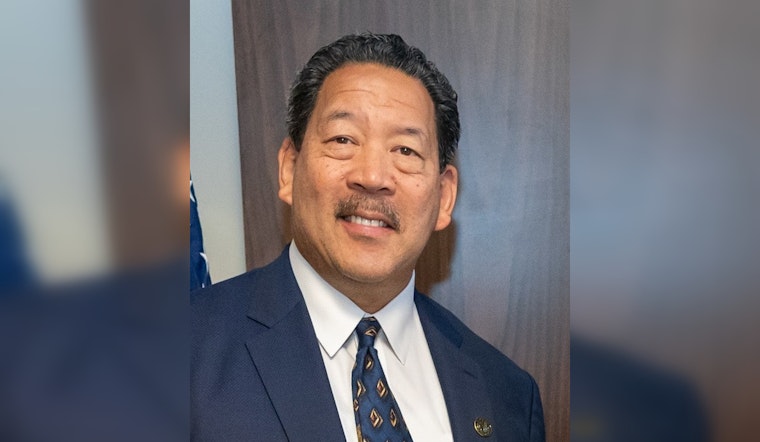
Seattle's future fiscal landscape took shape yesterday as Mayor Bruce Harrell put his signature on the city's 2025-2026 budget, setting the stage for two years of financial planning and policy priorities. The budget, an $8.3 billion package, with $1.6 billion allocated for the General Fund, addresses a sweeping range of concerns from public safety and housing affordability to economic recovery post-pandemic.
In a move to counterbalance a significant $250 million deficit, the City Council rallied behind a budget that not only echoed Mayor Harrell's original fiscal strategy but also geared up for some ambitious investments. "This budget reflects our continued and steadfast commitment to the residents of Seattle to build a safe, equitable, and thriving city for everyone," Mayor Harrell stated, as noted by the city's official announcement.
Adding to these sentiments, Councilmember Dan Strauss highlighted the record-high investments that the budget heralds. “In one of the toughest budget years in recent memory, we’re making record-high investments in the services our community depends on most—including affordable housing and public safety,” Strauss said. He expressed gratitude to those engaged citizens whose advocacies underpin such critical financial commitments, as detailed by the city's official website.
A standout feature of the budget earmarks historic figures for affordable housing, with $342 million set for 2025 and $343 million for 2026. Furthermore, it bolsters public safety across neighborhoods, triples support against the opioid crisis, and secures funding for 300 shelter beds—beds previously sustained by one-time federal dollars that were on the chopping block. Drawing on last year's blueprint, the budget advances health initiatives with a $14.5 million injection to combat the synthetic opioid epidemic and provide a gateway to rehabilitation services.
On the economic development front, the budget does not come up short. Small businesses can look forward to a $7.4 million boost, including measures to reactivate empty storefronts and facilitate access to capital. Also, there's a $28 million package tailored to the Equitable Development Initiative to thwart displacement risks and bolster community organizations' property ownership and adequacy. Furthermore, students are set to benefit too, with over a million directed to double Automated School Zone Cameras, ensuring their daily commute to school remains safe from speeding risks, according to the official announcement.





_(2).jpg)