

























































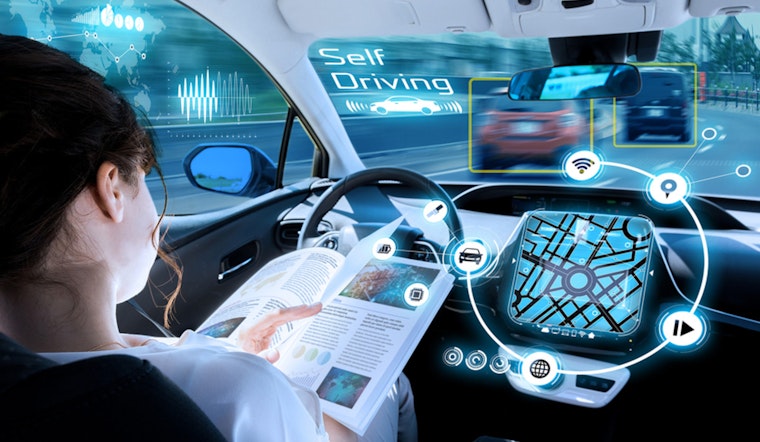
MIT's Advanced Vehicle Technology (AVT) Consortium has been tirelessly working to understand how drivers are interacting with, and to some extent, placing their faith in artificial intelligence and related advancements. Since 2015, the consortium has been a beacon of data-driven insights, offering a glimpse into how real consumers engage with high-tech vehicles. While we've seen a slight upturn in the public's readiness to embrace autonomous vehicles, according to a recent study from the Mobility Confidence Index - the work, far from over, continues to press on in unlocking the nuances of human-tech interaction on the roads.
The MIT AVT Consortium, in its relentless pursuit to truly wrap its head around consumer attitudes and the on-road behavior of drivers using these burgeoning tech marvels, realizes that building lasting trust in AI is key. "Cultivating public trust in AI will be the most significant factor for the future of assisted and automated vehicles," Bryan Reimer, founder of the AVT Consortium, told MIT News. Without a shadow of doubt, if trust doesn't take root, the full potential of AV technology risks to never be realized, which could send adoption rates into a serious stall. But Reimer assures us - it's the consortium's mission to not merely build, but to continually nurture this trust by better understanding driver behaviors, and to effectively translate these insights into the safer systems that consumers earnestly seek.
On drawing from one of the most expansive datasets of driver interactions across diverse populations, the AVT Consortium provides an unparalleled platform for research. This detailed analysis is critical for sizing up the performance of assisted and automated systems and for getting a real grip on driver behaviors. This dedicated research is paramount in contrasting the advantageous features of various technology manufacturers, fostering the evolution of designs that could quite possibly revolutionize the driver experience. As Yossi Sheffi, director of the MIT Center for Transportation and Logistics, puts it, this meticulous approach underscores MIT's commitment to understanding the human element behind the wheel, creating a safer, more efficient path forward in transportation.
Creating AI systems that feel trustworthy and intuitive is fundamental to the consortium's objectives, evidenced by their deep dive into vast amounts of real-world data. This info is instrumental in discerning not only the openness of consumers to these technologies but also their hands-on experiences, challenges they face, and ways to improve system designs. "We're not just interested in whether people are open to using assistive and automated vehicle technologies," Reimer explained to MIT News. Instead, they are committed to comprehensively understanding how these systems are being utilized in the flesh and aiming to refine them to boost safety and intuitiveness for all drivers.
The consortium isn't operating in a vacuum—its interdisciplinary approach invites participation from academic researchers, industry players, and consumer organizations. This collective brainpower is crucial in tackling the assorted challenges and seizing the opportunities that these modern vehicle technologies present. With over five decades of expertise, MIT's Center for Transportation and Logistics (CTL) is set to remain a cornerstone in the ever-evolving narrative of supply chain management and, by extension, in shaping a realistic, reliable, and embraced mobility future.





