

























































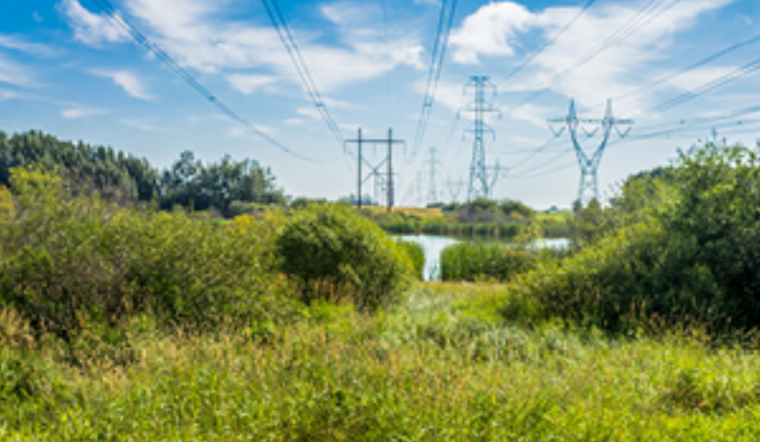
In a landmark decision, the Ohio Supreme Court ruled in favor of Ohio Edison, allowing the power company to use herbicides to manage vegetation under its power lines. In a 5-2 decision reversing an earlier ruling by the Seventh District Court of Appeals, the court placed its trust in the interpretation of easements granted to Ohio Edison back in 1948. According to Court News Ohio documentation, the majority opinion deduced that the original language provided the latitude to use modern methods to remove vegetation.
Straddling an old easement and modern methodologies, the majority, penned by Justice Michael P. Donnelly, emphasized the broader scope of "remove," which includes "eliminate or eradicate." Despite the absence of a direct reference to herbicides in the decades-old document, the decision permits Ohio Edison to harness them under its right to manage vegetation beneath transmission lines. According to Justice Donnelly via Court News Ohio, the power company can go beyond traditional trimming and cutting, aligning with federal mandates post the 2003 blackout requiring proactive vegetation management.
In contrast, the dissent, led by Chief Justice Sharon L. Kennedy, rested on the premise that while "remove" suggests complete eradication, applying herbicides doesn't fulfill this intention. As Chief Justice Kennedy's dissent delineated, "But inhibiting regrowth of vegetation is not the same thing as removing it." This encroaching issue, hinging on the definition of "remove," as per Court News Ohio, has been the cornerstone of the legal dispute that ultimately saw the Ohio Supreme Court giving the power company the benefit of the doubt.
The journey to this ruling began when landowners, the Corders, objected to herbicide use by Ohio Edison on their property, citing their interpretation of the easement language. The trial court initially washed its hands of the matter, leaving it to the jurisdiction of the Public Utilities Commission of Ohio. It was only after a to-and-fro in the courts that the matter settled under the gavel of the Supreme Court. Their verdict, impacted by the modern need to prevent vegetation interference with power lines, has set a precedent that nods to evolving practices over the static interpretation of old agreements.
Dissent aside, the Ohio Supreme Court's decision marks a momentous point in how easements are read in the context of technological advancements and evolving industry standards. The balance between landowners' concerns and the necessary preventative measures for maintaining critical infrastructure now leans toward the latter. As the majority opinion indicates, Ohio Edison's actions are not shackled to the explicit language of the past but rather permitted to gear towards the expectations of the present.





