

























































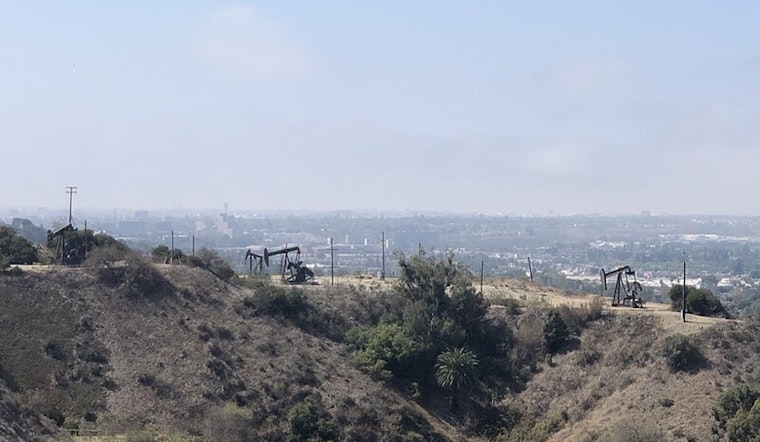
The tug-of-war between California's environmental legislation and the oil industry has reached a new inflection point as Sentinel Peak Resources takes California to court over a recent law that could shut down their operations in the Los Angeles-area Inglewood Oil Field. Sentinel Peak decries the law, signed by Governor Gavin Newsom in September, as an unconstitutional coercion that could set a costly precedent for the company.
Specifically, Sentinel Peak is contesting California Assembly Bill 2617, highlighting its stiff penalties for non-compliance. According to the Los Angeles Times, the lawsuit alleges that the law imposes "grossly disproportional" fines without a clear upper limit and regardless of any actual harm, potentially leaving the company facing monthly $10,000 penalties for each uncompliant well. The oil field at the crux of this legal battle comprises roughly 820 unplugged wells, with 420 currently active and approximately 80% of those yielding less than 15 barrels of oil or 60,000 cubic feet of gas per day.
Assemblyman Isaac Bryan, the law's author, remains steadfast in his defense of the legislation and the communities it intends to protect. "Our community has stood strong for decades to close this dangerous low-producing oil field, and we will stand strong in court to protect those frontline communities who have long deserved the right to live a full and healthy life,” Bryan told the Associated Press.
On the other hand, Sentinel Peak's legal team contends that this specific penalization unfairly targets their company alone, without considering similar operations nearby. They assert that AB 2617 discriminates against them as a "class of one," which, per the company's view, goes against the grain of equal treatment under the law. These arguments come even as environmental advocates reinforce the state's right to regulate operations for the public good. As Jamie Court, president of Consumer Watchdog, pointed out to the Los Angeles Times, "The state has a right to set limits on wells that have big environmental impact and little economic benefits."





