

























































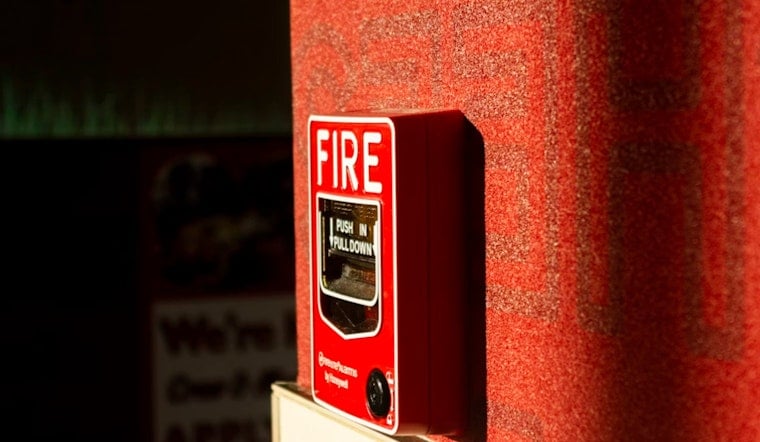
In California’s sprawling prison system, fire alarms are so unreliable that the state is paying people to stand in for the hardware. Between 2020 and 2025, corrections employees logged roughly 270,000 hours on so‑called "fire watch" posts while alarm systems sat offline, a stopgap that has cost tens of millions of dollars and quietly become part of daily life behind bars.
As reported by CalMatters, the Office of the State Fire Marshal has ordered interim fire‑watch coverage at many prisons where fire alarm control panels and the networks that connect them to central control are failing or degraded. CalMatters notes that CDCR logged about 270,000 fire‑watch hours between 2020 and 2025 and that the department has spent nearly $50 million staffing those posts.
CDCR’s own Master Plan Annual Report, submitted to the Legislature in January, sketches out just how big the backlog has become. The department grouped more than a billion dollars of urgent projects under infrastructure needs and repeatedly lists "Fire Alarm Replacements Sitewide" in its project tables. The report shows institution‑level replacement projects and explains that many fire alarm control panels are obsolete and no longer serviceable, which means they need either repair or full replacement. The document catalogs the site‑by‑site work the department says is necessary.
Money And Manpower
To start chipping away at the problem, the department asked for a mix of one‑time and short‑term funds. A budget change proposal requested $22.1 million this year for priority alarm replacements, $44.2 million in design and construction funding over the next two years, and a $15.2 million one‑time allocation to cover fire‑watch staffing costs, according to the state budget change proposal. CDCR told budget analysts that much of the fire‑watch work is coded as overtime, which has driven up personnel costs.
The Legislative Analyst’s Office urged lawmakers to approve the one‑time fire‑watch funding while they debate longer‑term investments. CDCR told the LAO it was on track to spend about $40 million on last year’s fire‑watch coverage, roughly $25 million more than it was authorized to spend. The LAO also warned that chronic deferred maintenance makes repeated short‑term fixes expensive and recommended new reporting requirements to better track costs, as the office explains in its budget brief.
In search of savings, the department is now piloting reclassified fire‑watch posts. At Solano State Prison, CDCR has experimented with "office assistant" positions that report to a correctional sergeant and, according to job postings cited in reporting, top out at roughly $4,357 a month. An experienced correctional officer’s base pay can exceed $9,600 a month, so the reclassification significantly cuts labor costs for the same fire‑watch coverage. "People who are incarcerated, as well as the staff inside these facilities deserve reliable systems and strong emergency protections that keep everyone safe," a formerly incarcerated firefighter told CalMatters.
What The Rules Require
State fire code requires life‑safety systems to be kept in operative condition, and the Office of the State Fire Marshal inspects CDCR facilities every year. When alarms are not working, OSFM can require interim fire‑watch coverage, CDCR’s Master Plan Annual Report explains. That regulatory backdrop is why CDCR is paying for human fire watches at the same time it argues that the price tag for full replacements is enormous and capital dollars are tight.
Lawmakers now have a stark choice: spend heavily up front to modernize alarm networks and cut recurring overtime bills, or keep funding staff‑intensive fire‑watch coverage that budget analysts say looks cheaper year to year but adds up quickly. The department’s budget requests, the Master Plan report and the LAO analysis all point to the same conclusion that the cost tradeoffs are real. Public‑safety advocates argue that a long‑term capital fix would better protect both incarcerated people and staff who are currently doubling as walking fire alarms.




