

























































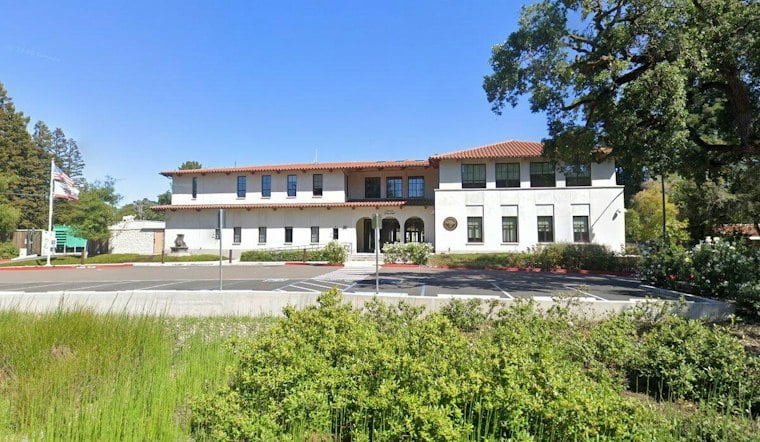
A 952-square-foot pool house belonging to Samir and Puja Kaul sits on an Atherton property that the town approved as an accessory dwelling unit — and then reported to the state as a brand-new unit of very low-income housing. The reason, according to new reporting: the pool house's stated rent was zero dollars.
The Kaul pool house is one of several examples cited in a Bloomberg investigation into how California's push to boost housing supply is playing out in one of the wealthiest towns in the country. Atherton approved the Kauls' pool house as an ADU and, because of the $0 rent, reported it to the state's housing authority as a new unit of very low-income housing, according to Bloomberg's reporting. The outlet identified at least three Atherton compounds total with ADU permits marked the same way — very low-income housing — because the owners reported charging no rent at all.
A Town Built on ADUs, And Not Just One
Atherton has approved hundreds of accessory dwelling units since 2018, per the same Bloomberg account, and the town has leaned on that pipeline to satisfy a state mandate requiring every California city to help ease its severe housing shortage. Bloomberg's analysis also identified 46 distinct compounds in Atherton — defined as two or more adjacent parcels owned by the same person or family — illustrating just how much of the town's land is concentrated among a small number of ultra-wealthy owners. Among them: the Andreessen family, whose Atherton compound required more than $100 million spent on land alone, according to the report.
The arrangement traces back to Atherton's own housing strategy. The town's housing element, reported on by the Almanac, says Atherton must plan for 348 new residential units by 2031, 148 of which are supposed to be set aside for low-income housing. The town hopes ADUs alone can satisfy roughly 80% of that overall state-mandated requirement, the outlet reported, with an estimated 280 new ADUs expected during the current housing cycle — 112 of them projected to serve very-low- to low-income households and 56 more for moderate-income households.
Zero-Dollar Rents Aren't New in Atherton
The town's own internal survey found that Atherton ADUs rent for a median of $0 and an average of just $765, the Almanac reported — numbers that suggest the Kaul pool house is far from an isolated case. Atherton's draft housing element reportedly went further, stating that the town's ADU program alone fully met its entire low-income housing goal for the 2015-22 cycle, a claim that underscores how central these units have become to the town's affordable-housing paperwork.
Atherton's municipal code lays out the legal framework that makes this possible. Under Atherton Municipal Code Section 17.52.040, a property owner may build a detached bonus ADU on a lot of at least two acres in zones where single-family homes are allowed, provided it meets the code's low- or very-low-income and rental conditions. Crucially, the code also specifies that ADUs and junior ADUs do not count toward a lot's allowable density — meaning they can be added without technically increasing how much a property is zoned to hold.
A Statewide Pattern Beyond One Town
Atherton isn't necessarily unique. Mansion Global has reported separately that some California homeowners are building ADUs they never intend to rent out at all, simply to fast-track construction of backyard amenities under the state's relaxed permitting rules. Bloomberg's reporting also places the current moment in a broader statewide context: California once permitted as many as 314,600 new housing units in a single year during the 1970s and 1980s, a pace that has since slowed to something closer to 100,000 units annually.
Whether any of Atherton's ADUs marked as very low-income housing are actually occupied by qualifying tenants, or provide affordable housing in any practical sense, remains unaddressed in the available reporting. What is documented is the paperwork trail: a pool house, a $0 rent figure, and a state filing that counts it as deeply affordable housing in one of the country's wealthiest zip codes.



