

























































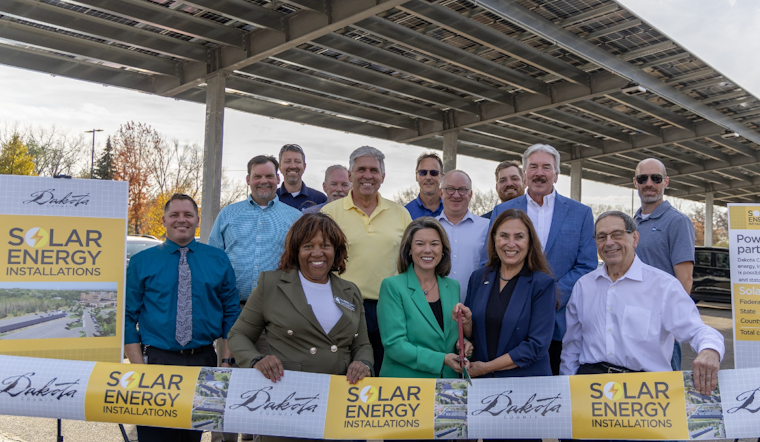
In West St. Paul, a ribbon-cutting ceremony held beneath the protective cover of a new solar carport signaled a substantial leap for Dakota County in the realm of renewable energy. Joined by a coalition of federal, state, and local partners on October 29, this event showcased the latest solar installations including, not just this particular carport, but two others, and a ground-level array, as reported by the Dakota County Government's official announcement.
The county isn't just shining a light on sustainable electricity generation with nearly 1,900 new solar panels, they're also refining efficiency through building lighting upgrades and modernized heating, and cooling systems — a clear strategy to slash energy consumption. Dakota County Board Chair Joe Atkins took pride in the assertion, “We're claiming that Dakota County is the first spot in the country that generates more electricity from renewable sources than any of our buildings or facilities use,” as published on the county's government webpage.
The aforementioned carport at the Northern Service Center aims to reduce 10 percent of the building’s energy demand, while the installation at the Western Service Center and Galaxie Library plans to cater to 60 percent of the library's needs. Moreover, the Robert Trail Library and Rosemount License Center are looking at nearly complete energy costs coverage thanks to their new solar setup. Not to be outdone, the ground panels at the Administration Center in Hastings aim to completely offset the building's electrical usage.
“This important project allows Dakota County to make smart energy investments and to lead on renewable energy among our fellow counties," Commissioner Mary Hamann-Roland echoed, understanding that their strides are part of a broader environmental concern. Beyond the solar initiatives, the project also incorporated 1.5 acres of pollinator-friendly landscapes, and more than 700 native plants, tended by the county's own volunteers — part of an integrated approach to energy and ecological stewardship, as per the details highlighted on the Dakota County website.
The financial backing for Dakota County’s sweeping energy advancements totaled $8.4 million, with federal funds covering the lion's share of $7.6 million, showcasing the kind of infrastructure projects supported at the national level. “Today's celebration should serve as an important reminder of what can happen as the result of those strong partnerships across all levels of government," said U.S. Rep. Angie Craig in a statement obtained by the Dakota County Government's press release. The state contributed another substantial half million, while the county itself invested $300,000 into this exemplar of innovation in renewable resource use, aligning with state energy goals, as state Rep. Mary Frances Clardy remarked in the Dakota County press release.





