

























































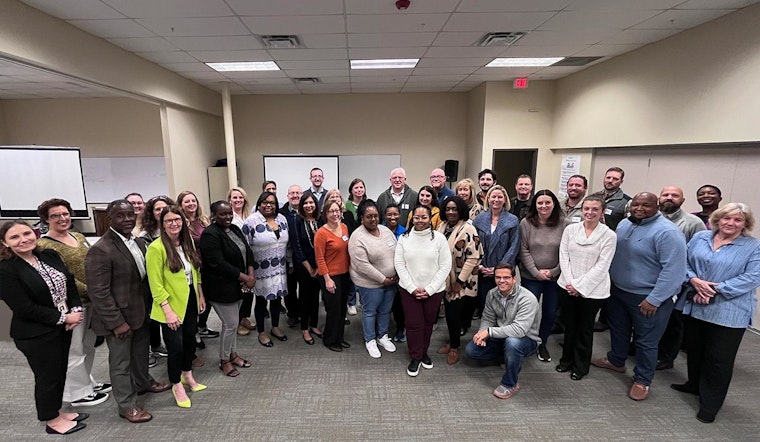
The North Carolina Office of State Budget and Management (OSBM) has announced that 37 state employees have successfully graduated from the Performance Management Academy. This latest cohort, drawn from 18 different agencies, has been trained over the course of six weeks in skills aimed at boosting the efficiency and impact of state government programs for the benefit of North Carolinians.
According to the OSBM announcement, Chief Scientist David Yokum emphasized the academy's role in strengthening government agencies by teaching a variety of skills, "logic modeling, delivering with agile techniques, using RCTs to learn about causal impact, and so forth." These are intended to enhance day-to-day work, leading to more effective results for citizens. The training was delivered by a mix of regional and national experts, including agency professionals.
Among the graduates is Asia Prince, Programs Director at the Administrative Office of the Courts, who acknowledged the significant impact of the academy on her approach to program evaluation. "The knowledge I gained in this course has caused me to rethink the process for evaluating the effectiveness of programs I currently oversee," Prince explained in a statement obtained by OSBM. She highlighted her newly developed skills in implementing strategies and logic models as key takeaways from the program.
Christie Burris, Chief Data Officer at NCDIT, also lauded the academy, stating, "The Performance Management Academy should be required for any state employee at a director level with program oversight." Burris pointed out the common gap between agency goals and their articulation in data-supported formats – a gap that this program aims to bridge. The full list of graduates, including individuals from various sectors like health, transportation, and technology, was also released by the OSBM.
The annual offering of the Performance Management Academy by the OSBM represents a continued commitment to fostering a culture of ongoing enhancement within the state government's operations. This investment in employee skill development mirrors a broader trend of incorporating data-driven decision-making and agile methodologies into the public sector's approach to governance.





