

























































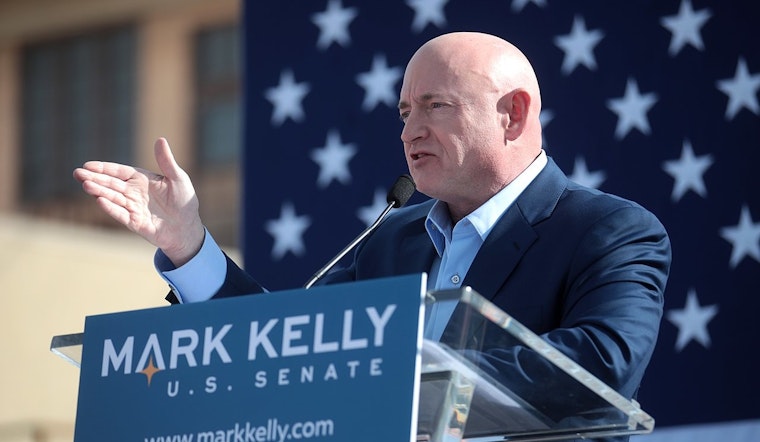
After securing bipartisan support, the Good Samaritan Remediation of Abandoned Hardrock Mines Act, championed by Senators Mark Kelly, Martin Heinrich, and Jim Risch, has successfully passed through the House of Representatives. This significant environmental legislation aims to simplify the process for state agencies, nonprofits, and other groups to undertake the remediation of neglected Hardrock mine sites. The act, designed to protect public health and improve water quality around these hazardous areas, is now on its way to President Joe Biden's desk for his signature, as reported by Senator Kelly's official website.
Celeste Maloy, Mary Peltola, and Susie Lee spearheaded the House version of the act, which follows in the wake of related efforts like the Legacy Mine Clean Up Act, advanced earlier by Senator Kelly. According to Senator Kelly, "I am grateful to the Republicans and Democrats who worked together to get this done and finally make progress on cleaning up mines that have impacted Arizona communities for decades," in a statement obtained by Senator Kelly's official website. The bill promises to address environmental hazards such as acid mine drainage, chemical releases, and groundwater contamination that disproportionately affect areas, like the Navajo Nation, home to over 500 abandoned uranium mines.
Senator Heinrich underscored that former attempts to remediate these abandoned mines were hampered by liability rules which could leave volunteer groups - the so-called Good Samaritans - legally responsible for pre-existing pollution, a deterrent that the new bill seeks to eliminate. "With today’s passage, we’ve now cleared one of the final hurdles preventing these groups from helping to protect the land, water, fish, and wildlife our communities rely on," Heinrich stated on Senator Kelly's official website.
In line with the Act’s provisions, a pilot permitting program will be established to facilitate not-for-profit cleanup initiatives, ensuring they have the necessary expertise and resources for adherence to federal oversight. Senator Risch, endorsing the initiative, remarked, "This work is long overdue. I am pleased to see our bill pass the House of Representatives with resounding bipartisan support and look forward to its swift signing into law," as reported by Senator Kelly's official website. The bill has garnered widespread support, drawing cosponsors across the political spectrum and endorsements from industry leaders, conservation groups, tribal leaders, and numerous organizations.
Reacting to the passage, Chris Wood, President and CEO of Trout Unlimited, praised the legislative effort: "This is a victory for common sense. Senators Heinrich and Risch took a bipartisan approach to a non-partisan issue. Clean water is a basic human right," as told to Senator Kelly's office. Similarly, Rich Nolan of the National Mining Association anticipates Biden's signature, which he believes will facilitate "responsible, much-needed land and water remediation efforts." The American Exploration and Mining Association, through its Executive Director Mark Compton, also expressed enthusiasm, viewing the legislation as a key step toward addressing the cleanup of historic, pre-regulation mine sites.





.jpg)