

























































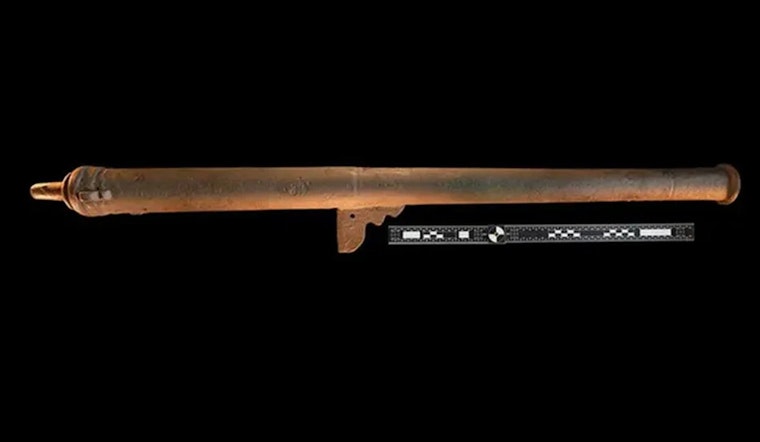
An astonishing discovery has emerged from the banks of the Santa Cruz River in Southern Arizona where excavators have unearthed what is believed to be the "oldest" firearm ever found on the continental United States. This bronze cannon sometimes referred to as a wall gun, dates back to the time of the 1539-1542 expedition led by Spanish explorer Francisco Vázquez de Coronado. In their findings, published on Nov. 21, 2024, in the International Journal of Historical Archaeology, Dr. Deni J. Seymour and her colleagues stated, "This wall gun is the first gun known to be associated with the Coronado expedition and is the oldest firearm ever found within the continental USA, and perhaps the oldest cannon currently known on the continent." The specifics of the firearm were outlined in a piece by FOX News.
The historic firearm was initially discovered in the fall of 2020 at an archeological site known as San Geronimo III, resting on the floor of what researchers describe as a "Spanish stone-and-adobe structure." Besides a brief mention by the WFIN article, an array of scientific techniques, including radiocarbon dating and optically stimulated luminescence, were used to date the firearm to the era of Coronado's ventures. The weapon, approximately 42 inches long and weighing around 40 pounds, was designed to launch lead balls well over 700 yards.
Researchers surmised that the firearm, likely crafted in Mexico or the Caribbean based on its simplistic design, was mounted on a wooden tripod to protect fortifications. Curiously, this particular cannon was found unloaded and there is no evidence to suggest it was ever discharged, an intriguing detail highlighted in the International Journal of Historical Archaeology study. The reason behind its abandonment may lie in a swift attack on the settlement, leading villagers to rapidly desert the area and consequently, the weapon.
Adding to the historical tapestry, the excavation site also yielded more artifacts, including broken swords, daggers, and various household items such as fishhooks and clothing fasteners. As part of a larger investigation into this period's history, further analysis of these artifacts is being arranged.





