

























































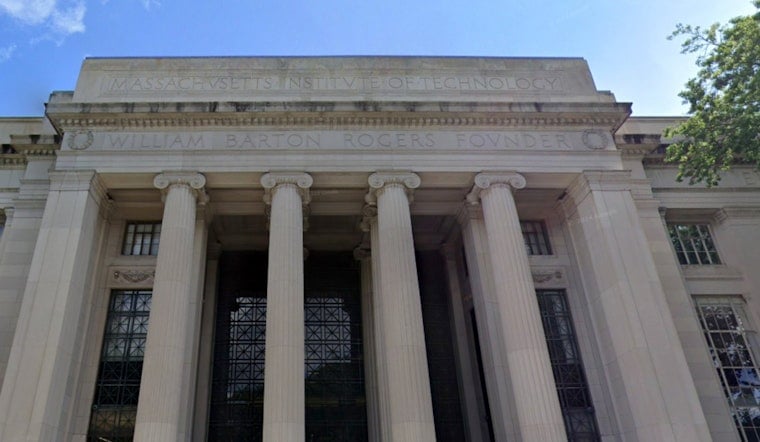
Cambridge's Kendall Square is bustling with more than just the daily hustle of MIT students and tech innovators. It's become a living laboratory, where city streets themselves are being scrutinized to unearth how their design impacts our social and physical behaviors. MIT Associate Professor Andres Sevtsuk, a spearhead in urban science and planning, has dedicated his career to understanding the dynamics of urban spaces, focusing on the often overlooked aspects — the walks we take, the retail shops we frequent, and the impromptu conversations that are the heartbeat of a thriving democracy. According to MIT News, Sevtsuk believes in environments that "allow us to get more things done on foot" because they encourage health, sustainability, and social connectivity central to democratic societies.
Despite its significance, data on pedestrian and cyclist behavior in urban settings isn't widely available, prompting Sevtsuk and his team to roll up their sleeves and dig into research on foot traffic. Their findings offer revolutionary insight into the patterns of pedestrian activity in cities. Delving into this under-explored facet, the professor and his research assistants started collecting data in several cities and, of course, right outside their doorstep in Kendall Square. They took a deep look at why people walk where they do, balancing both transportational and recreational considerations, such as grabbing lunch or simply enjoying a moment of people-watching. The data they compiled and the model they developed aim to profile pedestrian behavior with more nuance and accuracy than ever before.
This isn't just academic work; it has real-world applications. Taking their research global, the team brought their innovative model to Melbourne, Beirut, and New York City. The approach doesn't just catalog present patterns, it also anticipates future changes. In Beirut, for instance, Sevtsuk's model is being used to reshape community streets in the wake of the devastating 2020 port explosion. The research in New York is particularly extensive, encompassing the largest pedestrian network in the U.S. As Sevtsuk told MIT News, they're not just focused on "quantifying those effects," but also "how proposed interventions may impact a community."
The influence of Sevtsuk's work stretches beyond global cities. In a novel move, his research group has introduced an open-source tool named TILE2NET, which uses aerial imagery to automatically map out city sidewalks, a departure from traditional data collection methods that often neglect pedestrian infrastructure. This advancement in data collection is a critical step for planners and provides a clearer path for city enhancements. At the MIT campus itself, Sevtsuk adopted an integrative approach, melding spatial proximity and email communication data to reveal that physical closeness boosts interactions among departments, a finding that echoes earlier MIT research on workspace design and collaboration.
Sevtsuk's background, from his formative years in Tartu, Estonia, to his academic journey through Paris, and MIT, has attuned him to the nuances of urban life and design. After earning his BArch and SMArchS degrees, he went on to pursue his PhD at MIT, later contributing to burgeoning urban initiatives in Singapore and Indonesia, efforts that have helped to shape his understanding of urban environments and the necessity of context-sensitive approaches to planning. His commitment isn't limited to his research; as a dedicated educator, Sevtsuk's influence extends into the classroom, where he engages students from diverse backgrounds in the pursuit of building sustainable and equitable cities.



