

























































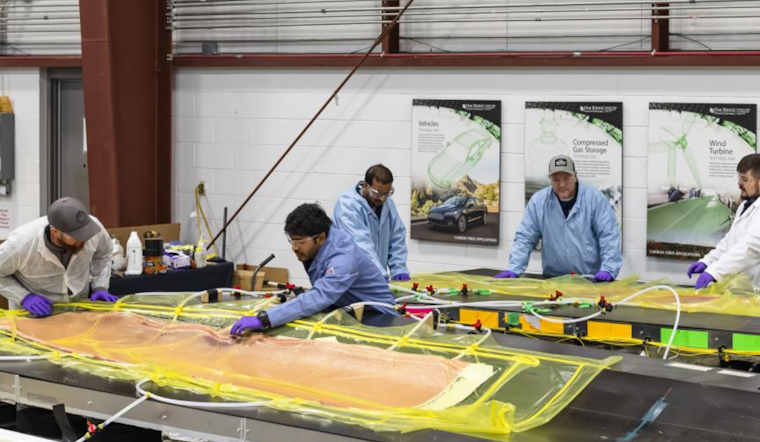
In an impressive display of innovation, researchers at the Department of Energy's Oak Ridge National Laboratory (ORNL) have developed new technology to protect composite materials from lightning strikes, a common menace to wind turbines and aircraft. Leading the charge is Vipin Kumar, an ORNL researcher who has been instrumental in devising multiple technologies that significantly mitigate lightning damage to turbines and airplanes.
Collaborating closely with his team, Kumar has reached a notable milestone by creating an entire 6.5-foot turbine blade tip, incorporating novel materials that remained unscathed after rigorous simulated lightning tests at Mississippi State University's specialized lab, according to Oak Ridge National Laboratory. Interestingly, while high current tests proved destructive, the novel materials and coatings demonstrate a promising path for blade protection.
Kumar and his team face a particular challenge: the lack of comprehensive data regarding the extent of lightning-related issues within the wind industry. Despite this, lightning strikes pose a significant source of blade-related downtime and repair expenses. Kumar emphasized the importance of resilience in wind energy, stating, "We know wind energy is a reliable source of electricity that supports energy security, but I believe anything we can do to make it more resilient and reliable is important," as he told Oak Ridge National Laboratory.
One of the remarkable features of the project is the use of a low-cost carbon fiber developed at ORNL, which has allowed for the construction of a blade tip that can withstand lightning impact. Tested using industry-standard methods, the hybrid carbon fiber composite blade tip reduces the blade's weight by an impressive 41%. It enables the manufacture of longer blades that can generate more electricity. As a result, the demand for carbon fiber within the wind industry may rise, with ORNL's economic formula potentially allowing it to compete within the market, as researcher Subhabrata Saha led the creation of the blade tip. Kumar elucidated the benefits of lighter and larger blades, "That means we can make bigger blades of the same weight that generate more electricity," he remarked in a statement obtained by Oak Ridge National Laboratory.
Moreover, the innovation's sustainability aspect has not gone unnoticed, with the new blade tip earning an award for "innovation in green composites design." In discussing the future of the technology, Kumar revealed a comprehensive recycling plan for the blade, aiming to use both the carbon fiber and the resin in 3D printing applications within the ORNL facility.
Kumar's approach has broadened beyond just manufacturing practices; he has also vetted the economic viability of his work by engaging with DOE's 2024 Energy I-Corps program. Engaging industry professionals, he has gathered insights into the challenges faced by turbine manufacturers and operators, shaping his innovations to suit market needs. Among the potential solutions, a nanofiller coating has garnered significant interest from these professionals due to its protective qualities and ease of application.
Looking ahead, Kumar is discussing field-testing his nanofiller coating at an actual wind farm, where its performance against lightning strikes can be monitored longitudinally. Acknowledging the hefty repair costs ranging from tens of thousands up to $1 million per blade, he remains confident in the transformative potential of his research. When operators and insurance companies often hesitate to cover lightning-related damages, Kumar stays focused on solutions, asserting, according to the Oak Ridge National Laboratory, "It’s an act of engineering."





