

























































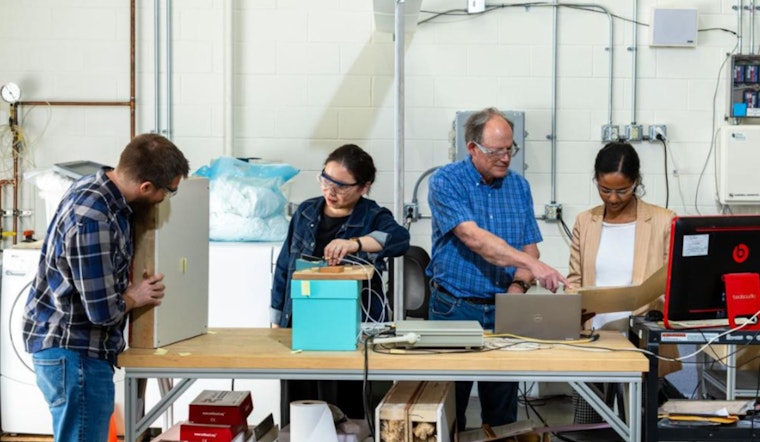
Researchers at Oak Ridge National Laboratory have developed a new microwave radar technology to detect hidden moisture in walls without damaging them. This method can help prevent mold, material damage, and poor air quality by spotting moisture early. "We know microwave radar shows great promise for this, because it’s well known that it can measure the moisture in wood samples," said Philip Boudreaux of Oak Ridge National Laboratory. The technology can quickly and accurately measure moisture behind walls, as shown in their study published in IEEE Xplore and presented at the IEEE Radar Conference 2024.
Researchers compared the radar readings with those from a handheld moisture meter. "The results proved that microwave radar technology can detect and measure moisture within the sheathing and can do so within 3% when compared to conventional handheld detection meters," Boudreaux said. The team also tested if the radar could detect moisture through drywall. "So, we placed a piece of drywall in front of the sheathing at a three-and-a-half-inch distance and immediately saw that, yes, the radar was seeing the sheathing," Boudreaux added. By using special algorithms, they were able to accurately measure moisture levels, as stated by the Oak Ridge National Laboratory.
The goal is to develop a small, portable radar system that can help homeowners, inspectors, and potential buyers find hidden moisture or damage in walls, roofs, and foundations. "When developing the detector, we made a system specifically applicable to walls in residential homes, and for general public access," said Boudreaux. The project, supported by the Department of Energy's Office of Science, aims to make it easier and faster to spot moisture problems, saving time and money while improving building maintenance, as reported by the Oak Ridge National Laboratory.





