

























































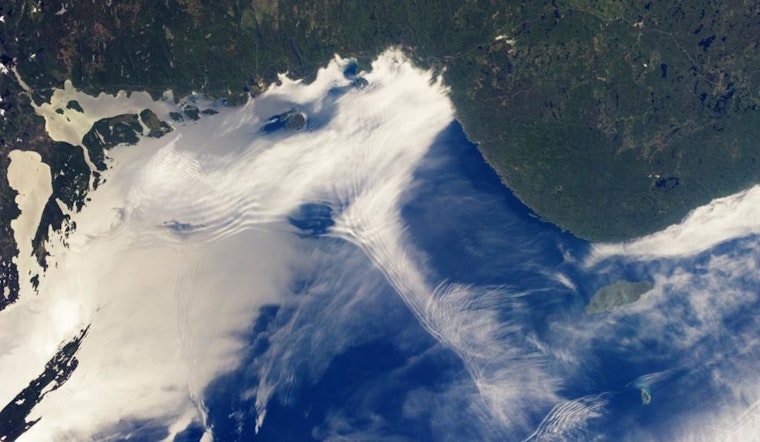
In a recent collaboration, researchers from Stanford University, the European Center for Medium-Range Weather Forecasts (ECMWF), and Oak Ridge National Laboratory have made strides in understanding how atmospheric gravity waves affect weather patterns. Utilizing the Summit supercomputer, scientists engaged in high-resolution climate simulations to glean new insights into phenomena that challenge traditional forecasting methods.
These gravity waves, integral to the development and movement of weather systems, have proven difficult to analyze due to the lack of detailed satellite data and the immense computational resources required. The scientists managed to effectively decipher the gravity-wave momentum fluxes, which are pivotal in transporting energy within the atmosphere. As Valentine Anantharaj, an ORNL researcher, explained, "Our simulations and analyses reveal gravity wave mechanics when direct observations lack sufficient frequency and detail." This was elaborated on in a statement obtained by the Oak Ridge National Laboratory.
The study ventured into previously uncharted territory, employing ultrahigh-resolution climate simulations with ECMWF's Integrated Forecast System on one of the world's most powerful supercomputers. The results, aligning with reanalyzed historical weather data, showed that the research not only augments the granularity of data available but does so by nearly doubling the detail afforded by prior studies.
This significant leap in resolution is expected to greatly enhance the development of advanced machine learning models, which aim to better predict extreme weather events. The broader scientific community anticipates that the addition of high-resolution value-added data will substantively improve weather forecasting capabilities. Indeed, the precision achieved in this study marks a consequential step towards that goal, as detailed in Scientific Data. Supporters and critics alike look forward to seeing how these findings will be incorporated into future weather prediction models and what effects they might truly ultimately have on forecasting accuracy.




