

























































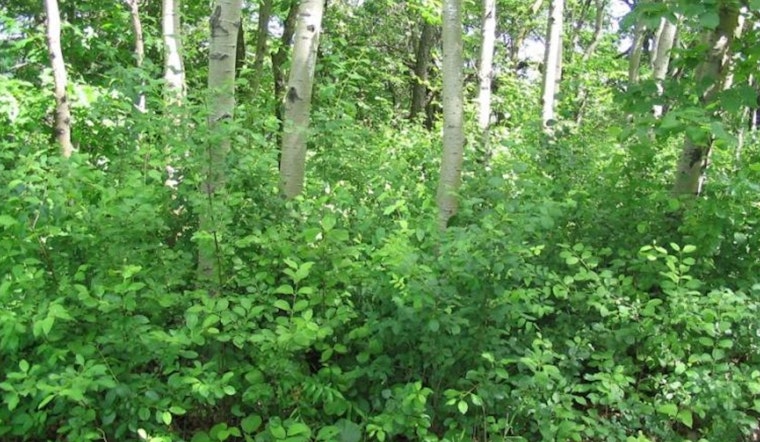
In an effort to counteract the pervasive issue caused by the invasive buckthorn species in Minnesota's forests, recent research from the University of Minnesota has proposed a novel strategy. According to the research published by the University of Minnesota, the introduction of native grasses, following the removal of buckthorn, might inhibit its re-establishment. Years of combating the aggressive invasive have been costly and often futile, as buckthorn tends to rapidly reclaim the cleared land.
The study, funded by the university's Minnesota Invasive Terrestrial Plants and Pests Center and supported by the Minnesota Environment and Natural Resources Trust Fund, highlights how the presence of grasses like Virginia wildrye could be the necessary edge needed in these environments. Unfortunately, results indicate that successful grass cultivation is contingent upon sufficient light, and in dimly lit forest interiors, these natives struggle to gain a foothold. According to the research, seeding native grasses can result in a 47% reduction in buckthorn abundance and an 81% decrease in the size of the resurgent seedlings — affecting nearly a 90% dip in the invasion from seeds overall.
To ensure the success of these native grasses, the study suggests that seeding should coincide with other forest management practices, including thwarting the resprouting of larger trees. It is during the first few years after mature trees are removed, when the forest floor is most exposed, that buckthorn is most vulnerable to competition. Mike Schuster, lead author of the research, said, "There are no easy solutions when it comes to buckthorn, but this work clearly demonstrates that by investing in native biodiversity we can make our natural areas more resistant to invasion in a way that means less time and money combating those invaders, fewer herbicides put into our environment, and healthier ecosystems overall."
The implications of this research are significant for resource managers, who should plan to apply the discovery by planting native species early in the spring after buckthorn has been cleared during fall or winter. The subsequent summer could then focus on treating any resprouting buckthorn, as it's pivotal to reinforce the deterrents against its return. Peter Wragg, a lecturer involved in the study commented, "This is one way we can interrupt the seemingly endless cycle of buckthorn management that so many of our woodlands find themselves trapped within. It gives us an opportunity to choose a different path forward." Current efforts by the research team are invested in refining the seeding methods by determining the best seed mixtures and rates, as well as evaluating how these differ among the various woodland and forest conditions within the state of Minnesota.
The broader mission of the College of Food, Agricultural, and Natural Resource Sciences at the University of Minnesota, along with the Minnesota Invasive Terrestrial Plants and Pests Center, is to address challenges like these with innovative science and education. Their combined endeavors contribute not only to the state's well-being but potentially serve as a model for similar environmental issues faced nationwide.





