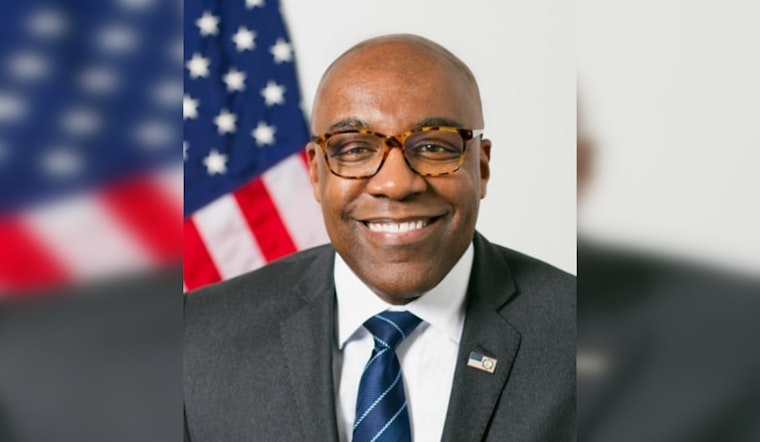
Attorney General Kwame Raoul, alongside colleagues from Arizona, Oregon, and Washington, has mounted a legal challenge against President Donald Trump's controversial move to strip away birthright citizenship in the United States. Following an executive order issued on his first day back in office, President Trump has aimed to fulfill a long-standing campaign vow by ending the practice that grants citizenship to all children born on U.S. soil, according to the Illinois Attorney General's Office. However, this directive has since met stern opposition, as it is being condemned for its alleged violation of not just the 14th Amendment but also established U.S. law.
In step with this action, Raoul is determined to safeguard what he perceives as a fundamental American value. "The children born in the U.S. to immigrants are entitled to the rights and privileges that go along with U.S. citizenship," Raoul stated, as mentioned in a press release on the Illinois Attorney General's official website. He further emphasized the need to "discuss bipartisan commonsense immigration reforms," expressing his dissent against the executive order as a viable resolution to the nation's immigration debate.
The legal pursuit against this executive decree has now found its battleground in the U.S. District Court for the Western District of Washington. Raoul and his counterparts are contending that no constitutional provision or legislative text grants the president the power to unilaterally dictate the conditions of birthright citizenship. The plaintiffs are seeking immediate relief via a temporary restraining order and a preliminary injunction, hoping to prevent the new mandate from taking effect and to preserve the status quo.
Raoul's team argues that the order could, at large, negatively impact hundreds of thousands of American-born children, stripping them of the civic perks and obligations that come with citizenship—a change that is particularly significant given the bicentennial history of birthright citizenship in the U.S. As reported by the Illinois Attorney General's Office, such a constitutional right, dating back to post-Civil War amendments, has been twice defended by the U.S. Supreme Court, rendering the executive order not just political overreach but a legal aberration.
In practical terms, the ramifications stretch beyond the individual level, potentially harming state operations and finances. The lawsuit indicates that the cessation of birthright citizenship could lead to a drastic reduction in federal funding for state-administered programs—programs such as Medicaid and foster care that partially rely on the immigration status of recipients. This shift will also compel states to suddenly start to verify the immigration status of newborns, thereby imposing a significant administrative burden on local agencies already charged with serving resident populations.