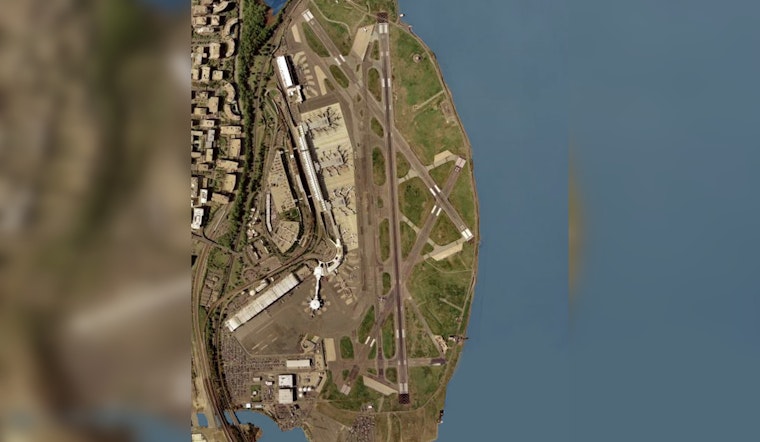
As details emerge from the tragic mid-air collision over the Potomac River, questions abound regarding the circumstances that led to the calamity in what is often touted as the safest airspace in the world. According to CBS News, on the evening of the accident, just one air traffic controller manned the task that is usually the responsibility of two, overseeing both planes and helicopters from the Reagan Washington National Airport tower.
Ray Gibbons, a retired Chicago air traffic controller with more than 20 years of experience, expressed to CBS News Chicago that while such staffing levels during non-peak hours aren't uncommon, the collision over the Potomac was a jarring sight for anyone acquainted with the demands of the control tower. "I would not want to have been a controller in the tower at DCA and seeing what I saw on TV," he said, pointing out the profession's chronic understaffing. Despite witnessing the crash on TV, causing the controller to gasp audibly at the end of the tape, Gibbons maintained that flying remains the safest mode of transport.
The BBC reported that the airspace over D.C. is highly regulated due to national security and the proximity to significant government buildings. Despite these restrictions, the skies are busy with commercial flights, private aviation, and helicopters—sometimes shuttling high-ranking officials around the city. Aviation attorney Jim Brachle illuminated the inherent risks, explaining how "you're putting potentially two different aircraft in a really small space with hardly any separation." Adding a layer of complexity to the already intricate scenarios playing out in the skies over the nation's capital.
Recovery teams extracted flight data recorders, which are hoped to provide insight into the moments leading up to the accident. But while the National Transportation Safety Board (NTSB) investigation is only at its outset, experts are already probing the protocols that could have allowed such a deadly encounter in a space that, as aviation consultant Philip Butterworth-Hayes put it to the BBC, exists "at the nexus of different aviation systems". John Strickland, an aviation expert, noted that the complexity of traffic management in D.C.'s airspace is not "totally unusual" when compared to other international transit hubs, like London or New York.
Investigations will continue as the aviation community and the public await the NTSB's preliminary report, seeking answers to how safety systems designed to be impenetrable failed, leading to the untimely demise of dozens. As noted by the BBC, at stake is an understanding of how, in an airspace blanketed by security and safety measures, two aircraft managed to find themselves in a lethal confluence, shattering the trust placed in the world's "most controlled" skies.